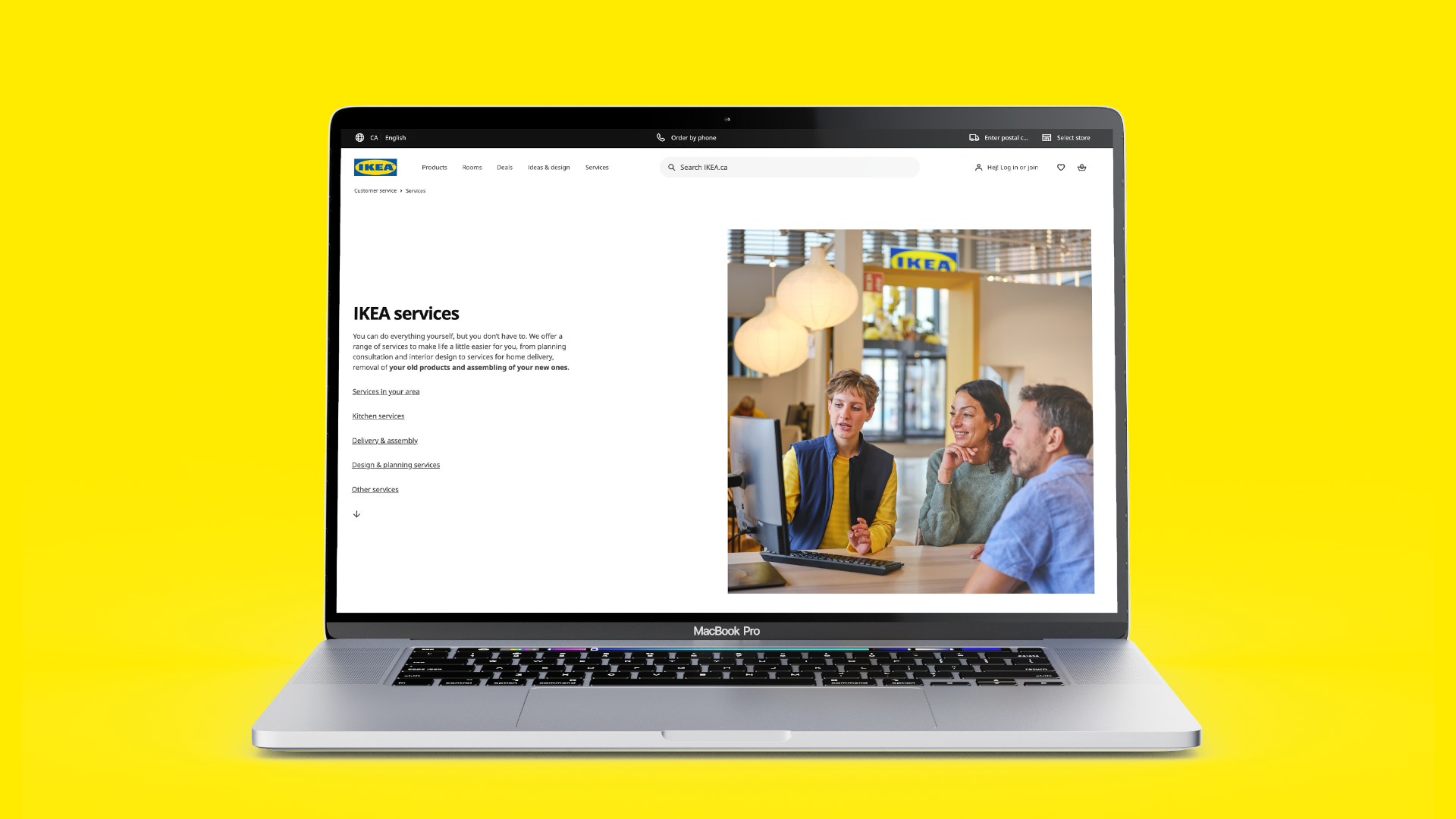
IKEA
Improving IKEA’s digital and In-Person Kitchen Design Service
TIMELINE12 Weeks
Sept - Dec 23
DELIVERABLESUX Digital & Physical solutions (Sketches)
ROLEUX Researcher, UX Designer
METHODSUser Interviews (5), Task Analysis, Usability Test & Ethnography Visits
CONTEXTIKEA is a global home furnishing brand known for its modern, minimalist designs, affordable prices, and ready-to-assemble furniture. This project explores IKEA’s Kitchen Design Service to identify key problems and opportunities that can improve the experience for users and the business.
PROBLEMCustomers struggle to independently navigate IKEA’s kitchen design process - overwhelmed by product options, gated behind costly appointments, and left without clear information on services or next steps.
INSIGHTSUsers want control and clarity - the ability to explore, compare, and purchase on their own terms. The current experience forces reliance on staff and appointments, creating friction that undermines IKEA’s promise of accessible, affordable design.
CHALLENGE
How might we improve the kitchen design service by prioritizing user control, awareness, and accessibility?
THE SOLUTION
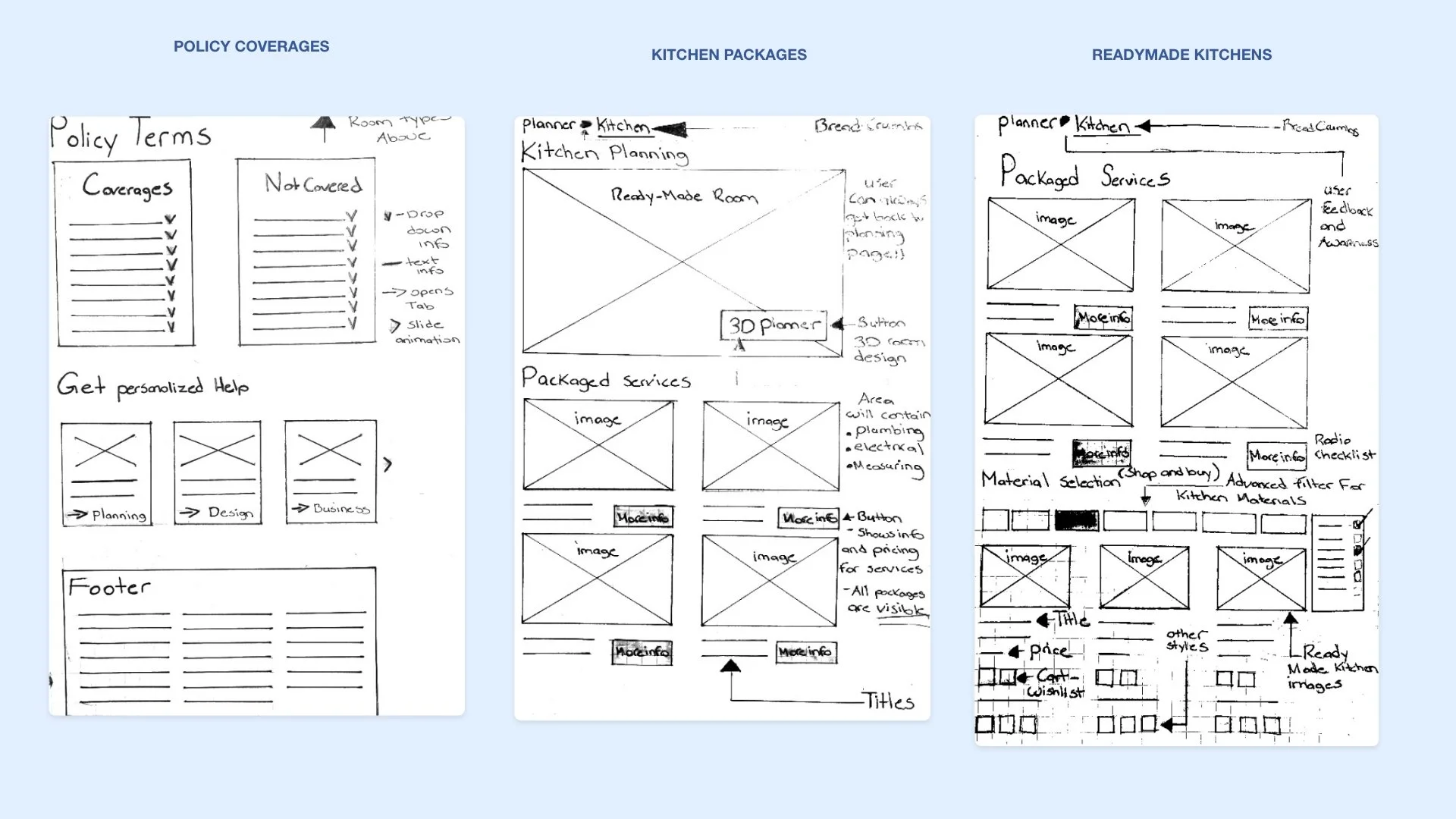
A redesigned kitchen services experience with clear policy coverage, specialized packages, and a browsable gallery of ready-made installations - giving users the ability to explore, compare, customise on their own terms.
SUMMARY
Overview of Research Findings
Ethnographic Visit
Customers interactions involved too much time stationary and on screens
Product samples don’t reflect quality
Appointments are costly ($30 for 30 minutes )
User Interviews
User prioritize seamless experiences where they can track actions and history
Wants to purchase everything in one place
Wants clear information on sales, installations services, and precautions
Task Analysis
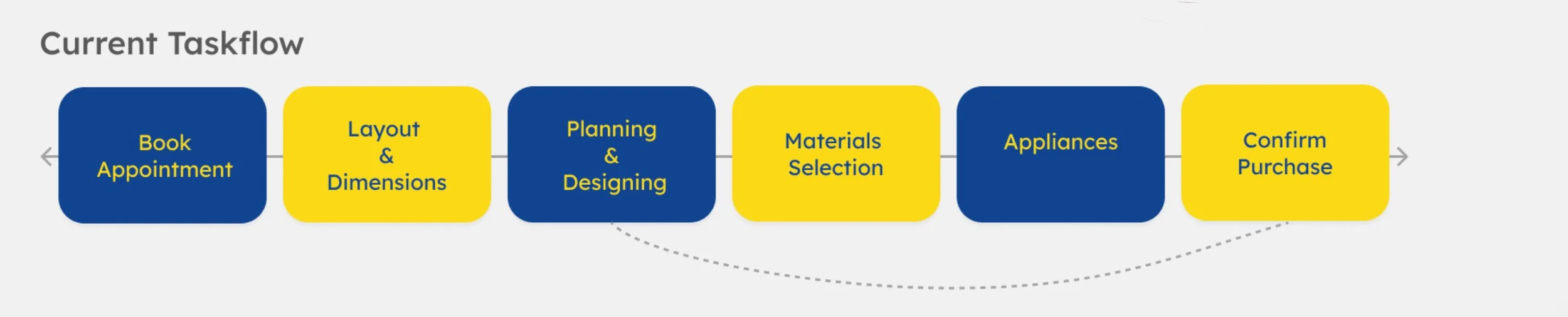
Participants were unable to start the kitchen design process
No clear user path for kitchen services
Users are forced to book an appointment
Overwhelming product offerings
Phase 1: User Interviews & Task AnalysisUnderstanding the Users
By conducting user interviews, the aim is to reveal users actions, emotions and behaviours towards the kitchen design services strength and pain points. By doing so, we can make the necessary changes to improve the existing service offerings.
Method Outcomes & Benefits
Gaining insights into users and their needs
Identifying constraints and frustrations with the design
Flexibility, can adapt to participants responses
Able to analyze common themes and patterns
Research Questions
How do users distinguish kitchen features?
Do users feel overwhelmed by the number of options?
How does too many options affect UX?
Do users feel their time is used effectively?
Does choice overload affect commitment?
Interview Logistics
5 participants recruited through a screener
Conducted Via Teams & Discord
Sessions ranged 30 to 45 minutes
Data stored confidentially on researcher cloud
Warm up questions, main interview & usability test
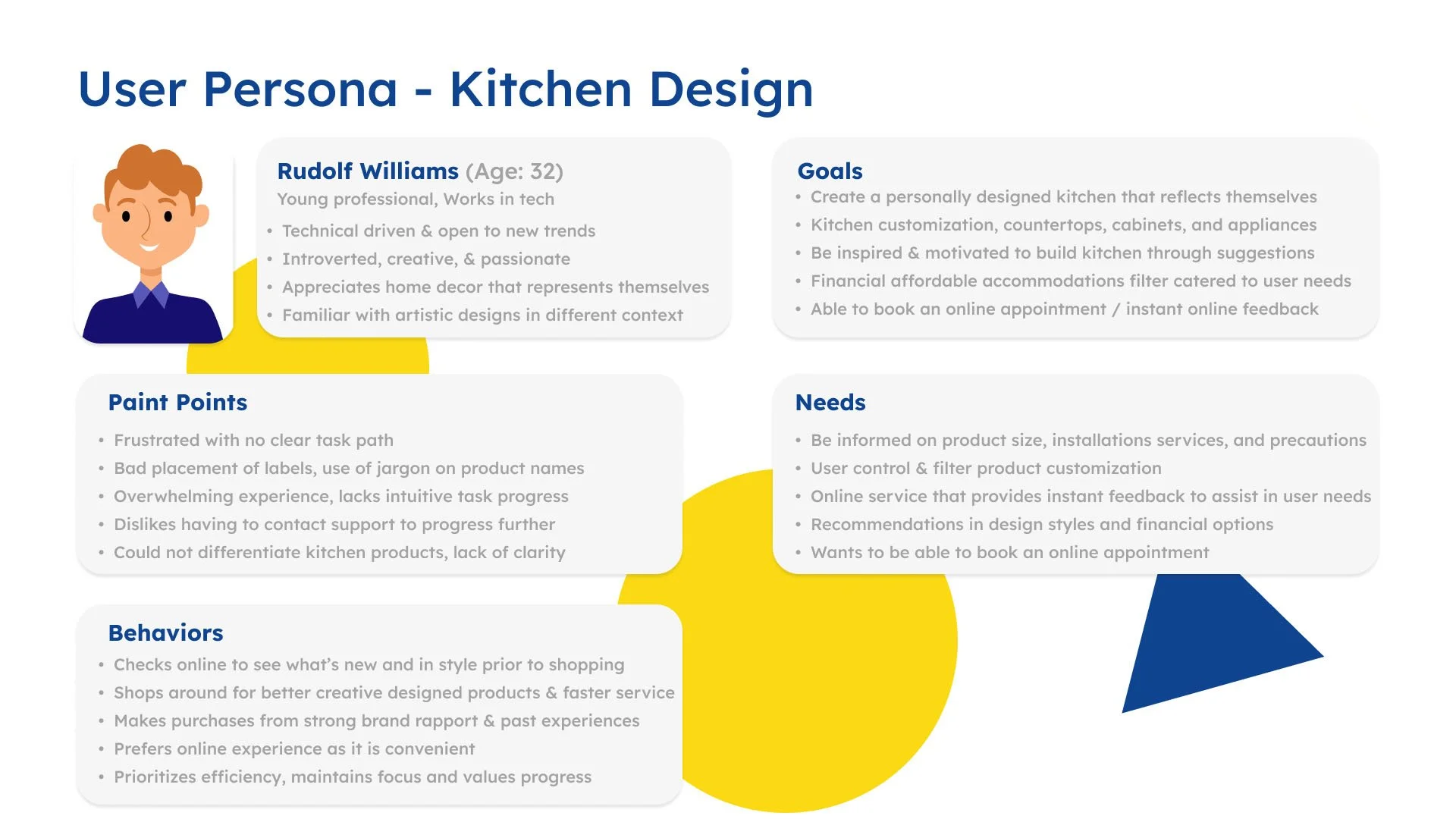
Meet Rudolf
A user persona was created to assign a person from the target audience. This helps us keep in mind who we’re designing for.
Rudolf’s Journey
A journey map was created as a combination of all 5 participants experiences during the usability testing. This allows us to determine where the pain points are in the ordering process
Phase 2: Ethnography VisitsAnalyzing the In-Person Kitchen Service
By conducting an observational ethnography visit, paired with interviewing an IKEA kitchen representative, I was able to gain deeper insights into the in-person kitchen design experience.
This approach was ideal for studying IKEA’s kitchen remodelling services as it allowed me to identify improvements from the user’s perspective, fostering emotions throughout the process
Method Outcomes & Benefits
Gain an empathetic understanding of users context
Identify user’s unmet needs and goals
Gain authentic un-bias emotions about service
Able to observe and role-play Kitchen Design Service
Research Questions
How does IKEA kitchen staff experience influence customer commitment?
Does limited material customization reduce customer satisfaction?
How does IKEA’s self assembly requirement impact time and cost?
Do complex assembly components reduce installer efficiency and user satisfaction?
Ethnography Logistics
Visited Queensway IKEA & spoke with a Kitchen Specialist
45-minute session
Task-analysis walkthrough with Q&A
Captured kitchen selection and department
Data stored securely on researcher cloud
In-Person Kitchen Experience
Experiencing and examining the Kitchen Design Service
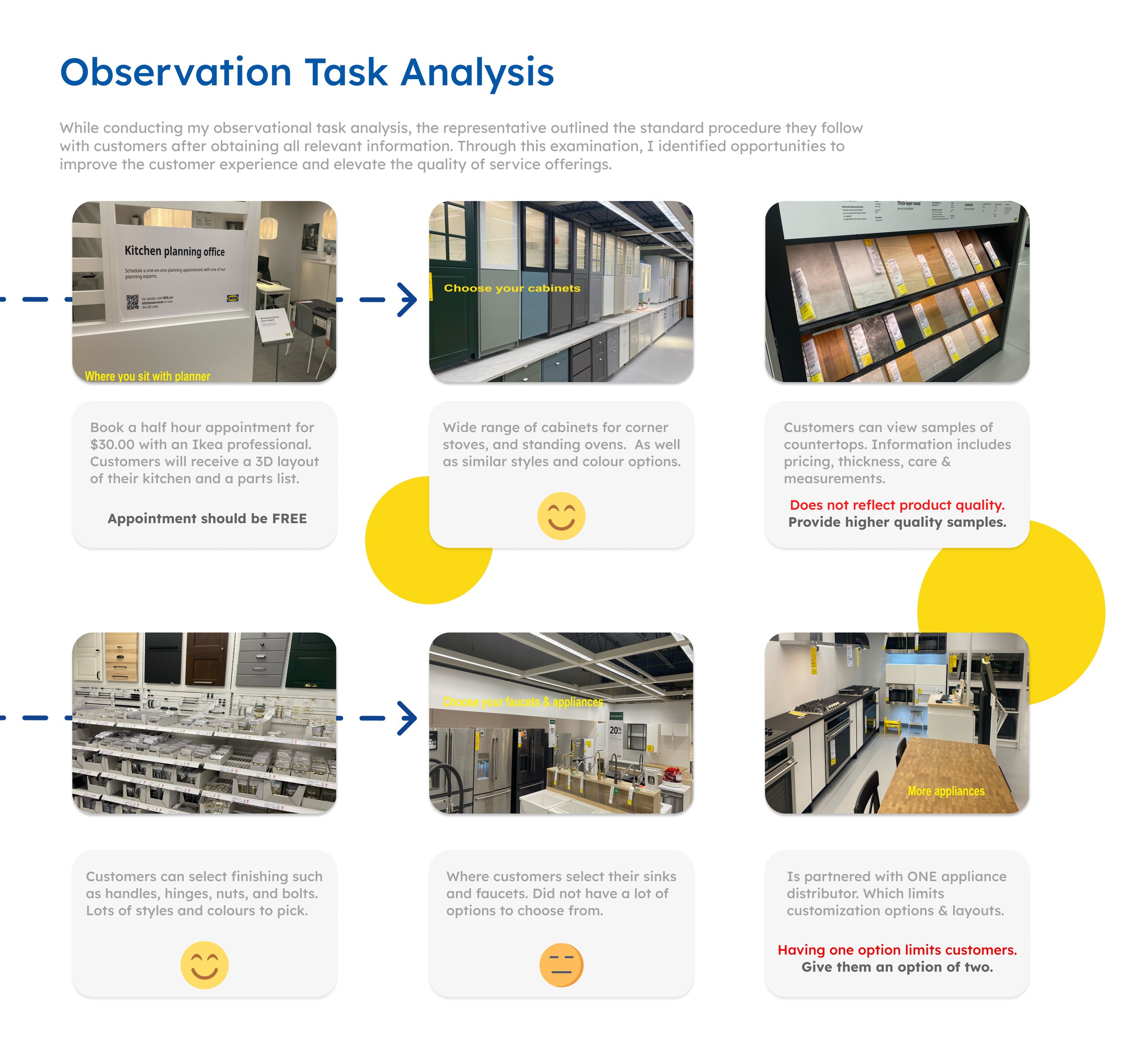
Conclusion From Site Visit
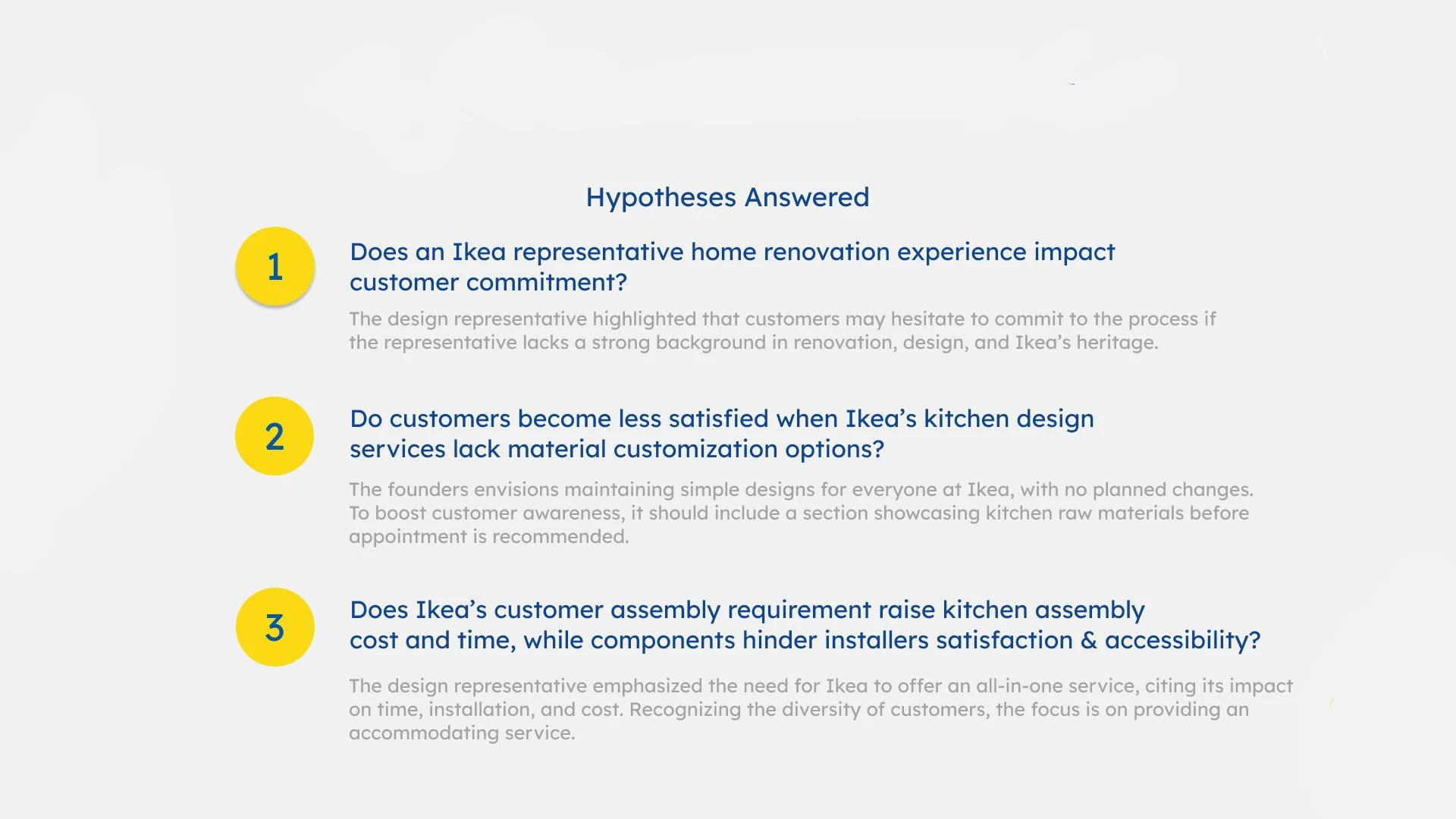
THE DELIVERABLES
The new kitchen design service
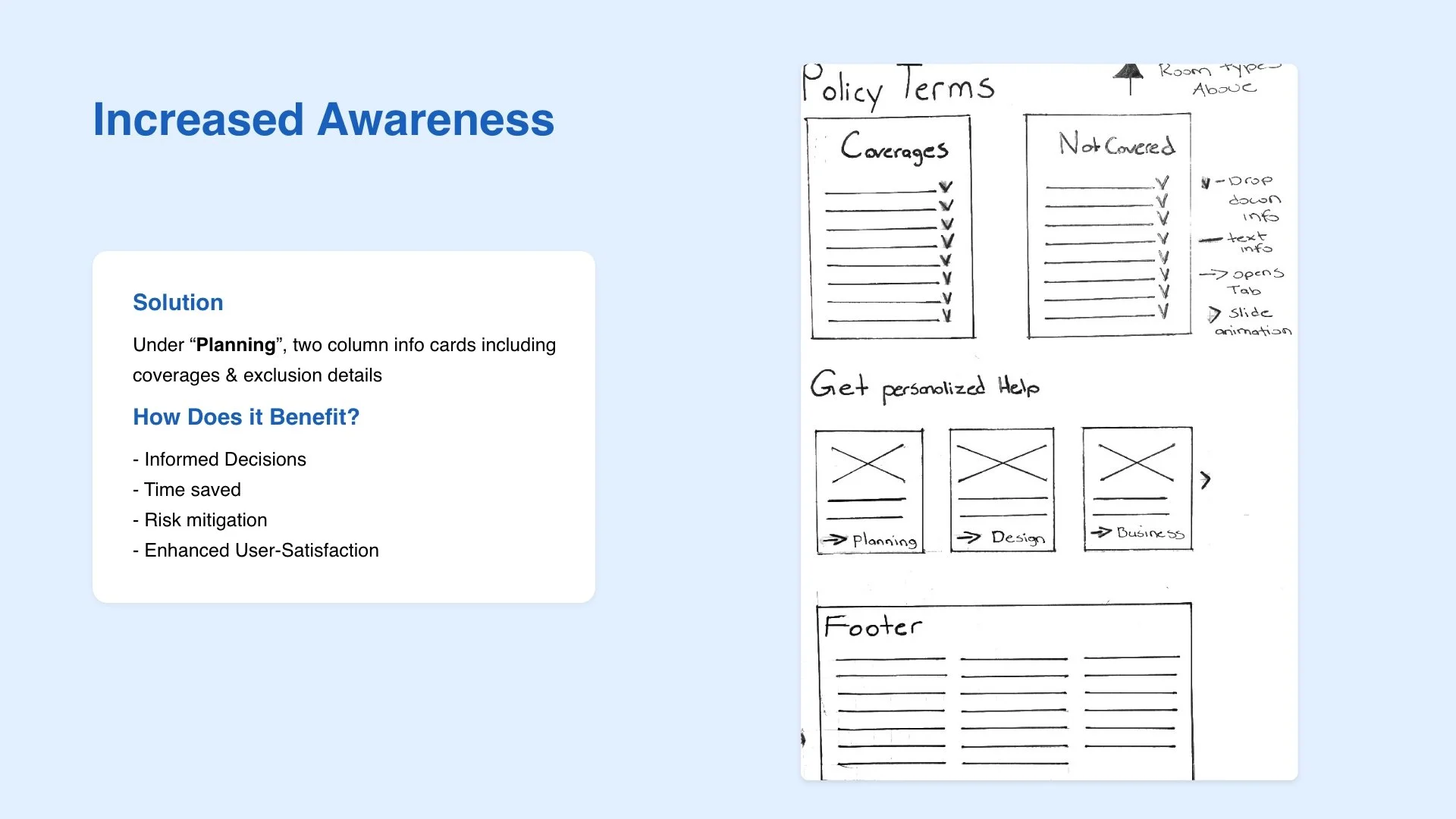
Solution: Policy Section
Policy Coverage page that outlines renovation coverages under IKEA’s kitchen services.
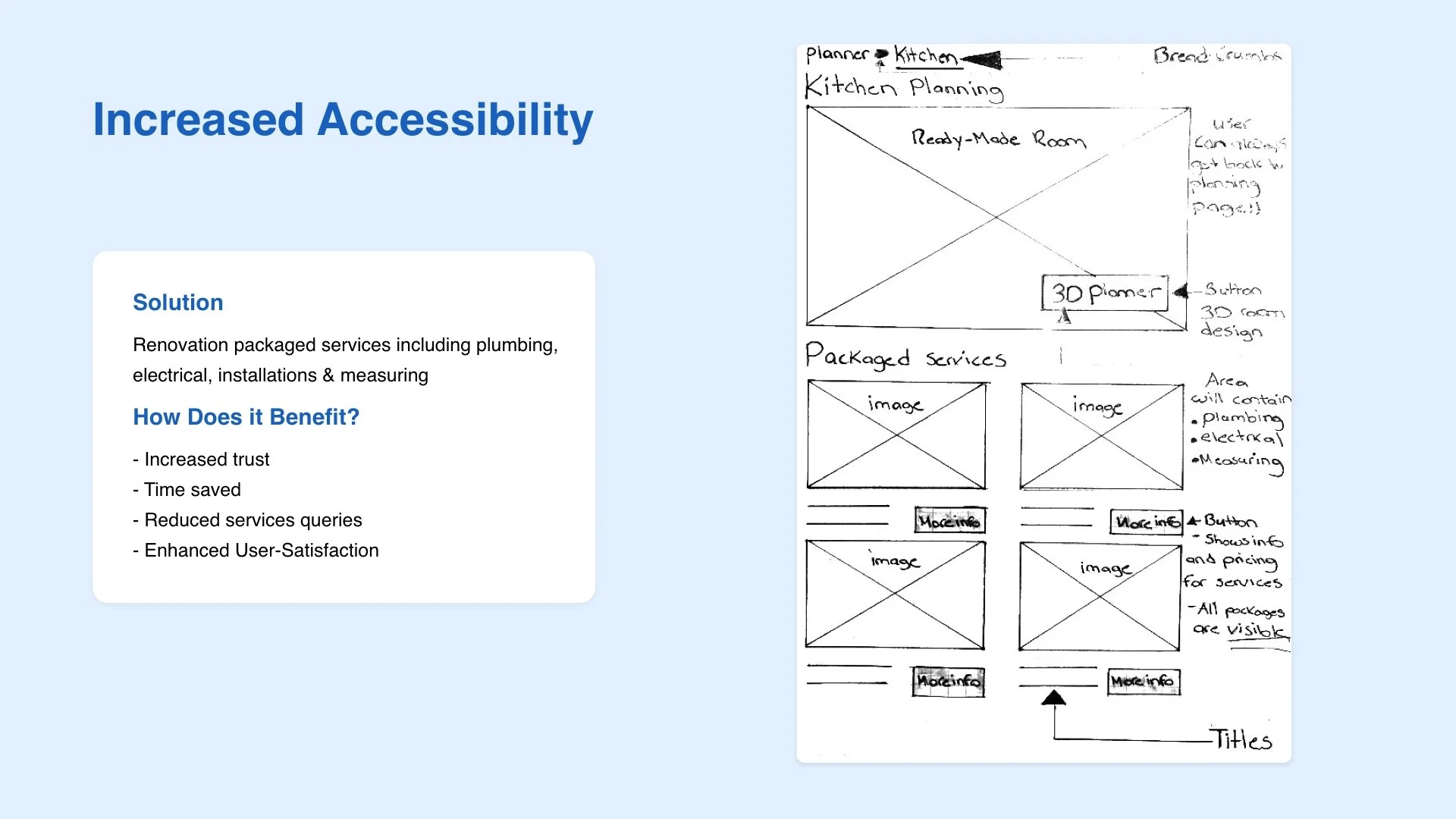
Solution: Renovation Packaged Services
Renovation packaged services that allows customers to select kitchen preparation and installation services.
Solution: Predesigned Kitchen models
Digital & Realistic readymade kitchens where customers can customize to their desired preferences. Such as countertops, handles and cabinets.
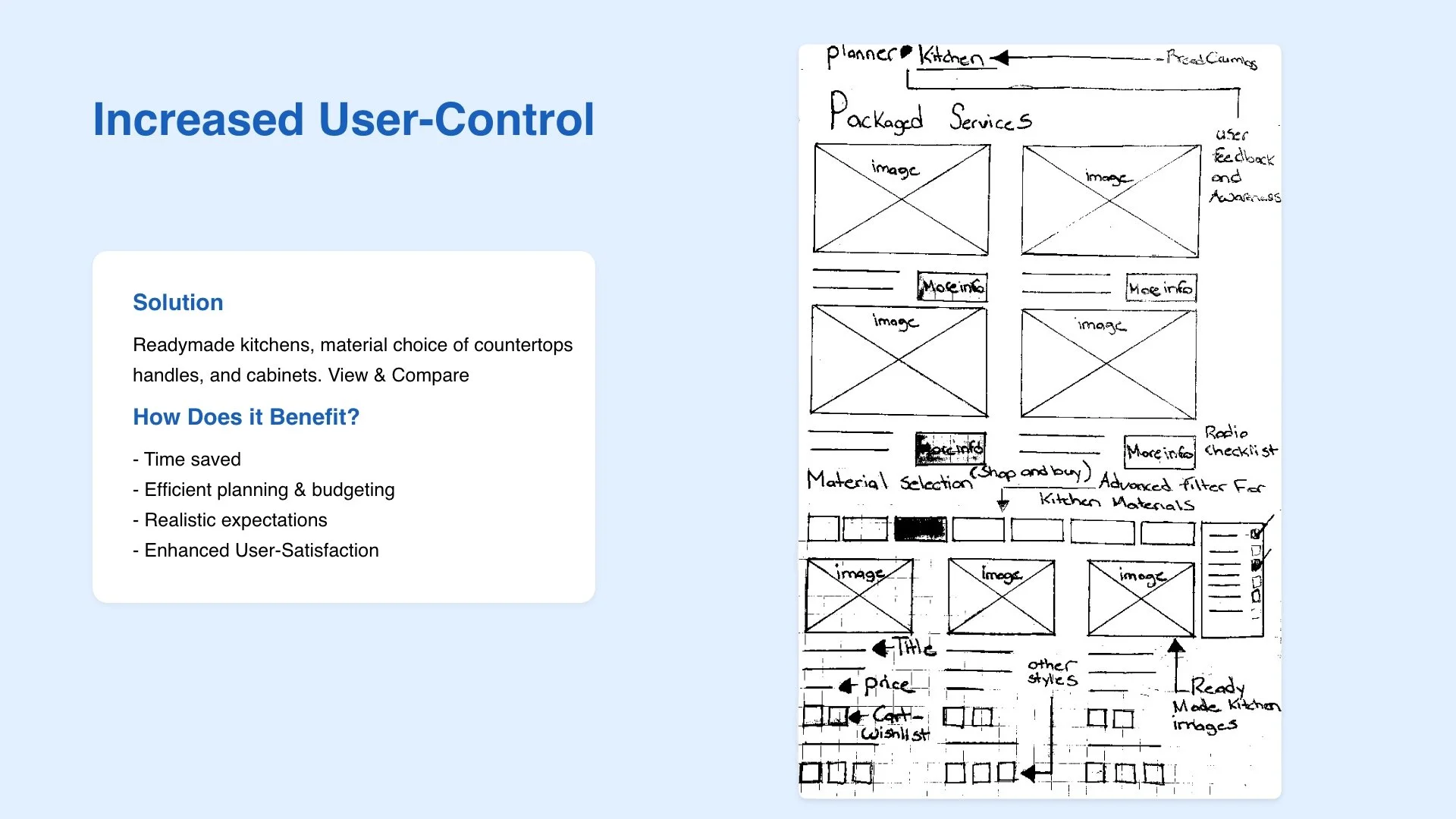
Business ImpactThis reduces friction in complex kitchen planning decisions by improving clarity and supporting greater customer confidence
TAKEWAYS