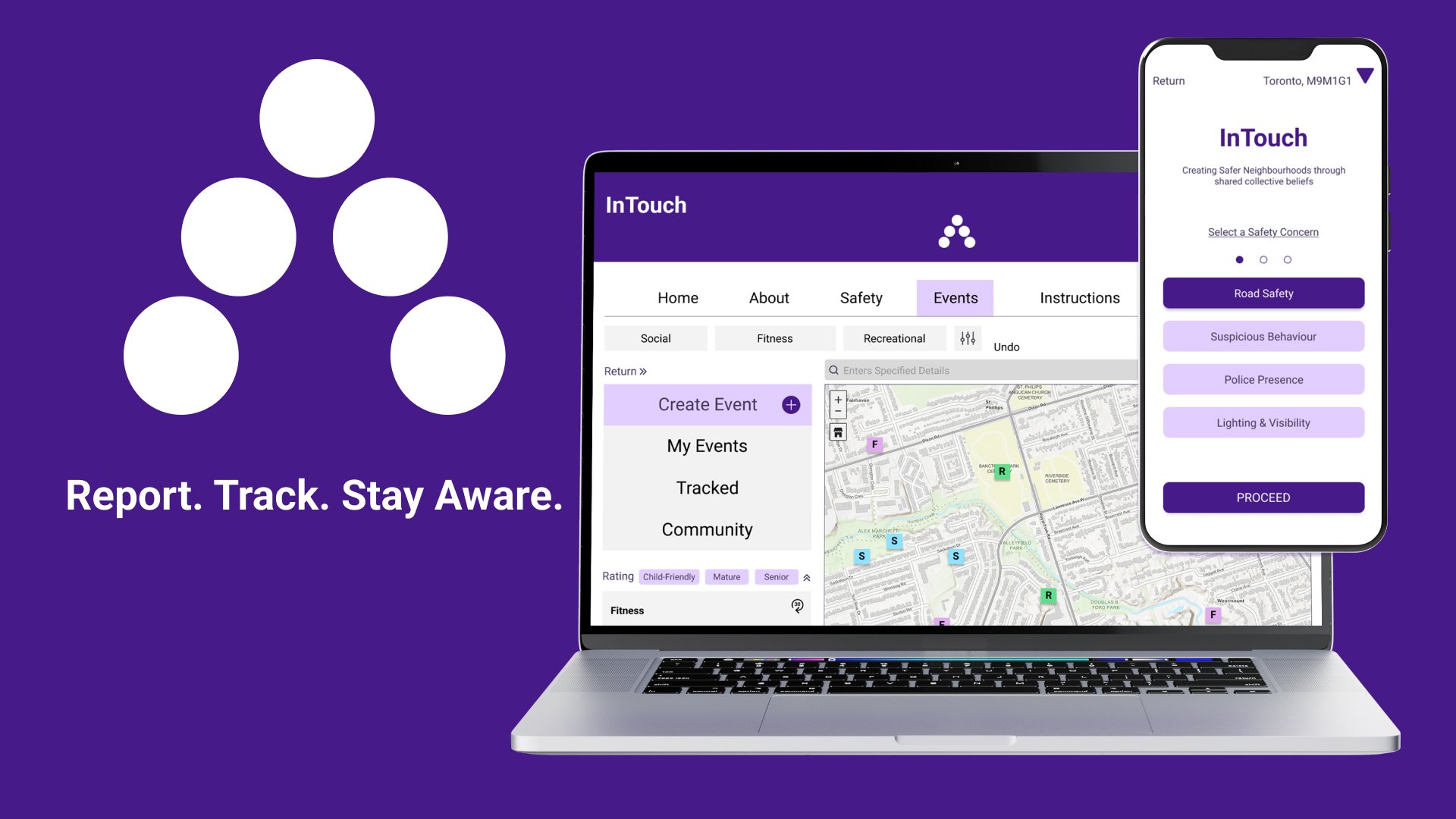
InTouch
Enhancing Residential Safety
TIMELINE30 Weeks
DELIVERABLESWebsite & Mobile Design
ROLEUX Research, UX/UI, Branding, Visual Design
METHODSSecondary research, competitive analysis. interviews, surveys, ethnography, usability testing
CONTEXTResidential Safety is a growing concern, as crime, neglect, and hazards continue to impact residents quality of life. Safety goes beyond the absence of crime. It needs engagement and community awareness. Everyone deserves to feel safe, regardless of income or status.
PROBLEMResidents have no shared, trusted space to communicate safety concerns, leaving neighbours disconnected and local issues unresolved.
INSIGHTResidents want safer neighbourhoods but place responsibility on institutions. Privacy concerns and a lack of familiar spaces prevent open communication.
CHALLENGE
How might we help residents build trust with another so they can openly communicate safety concerns and work together to improve their neighbourhoods?
THE SOLUTION
InTouch is a neighbourhood safety service that helps residents report concerns, track local issues, and join community-driven events.
Secondary ResearchUncovering the absence of Residential Safety
My initial research reveals that residential safety goes beyond crime rates, its shaped by physical design, social cohesion, resident perception, and system inequality. Poorly planned developments, limited surveillance, and exclusion from municipalities leave residents feeling vulnerable.
While this study is rooted in Toronto, findings were gathered from cities across Nigeria, Pakistan, China, Ireland, & Czech Republic confirm that this is a global concern requiring community centred solutions.
Why is this a problem?
Residents feel unsafe in spaces they call home
Neighbourhoods are built without community input
Poor design creates opportunities for crime
Socioeconomic inequality limits access to safer living conditions
What currently exist?
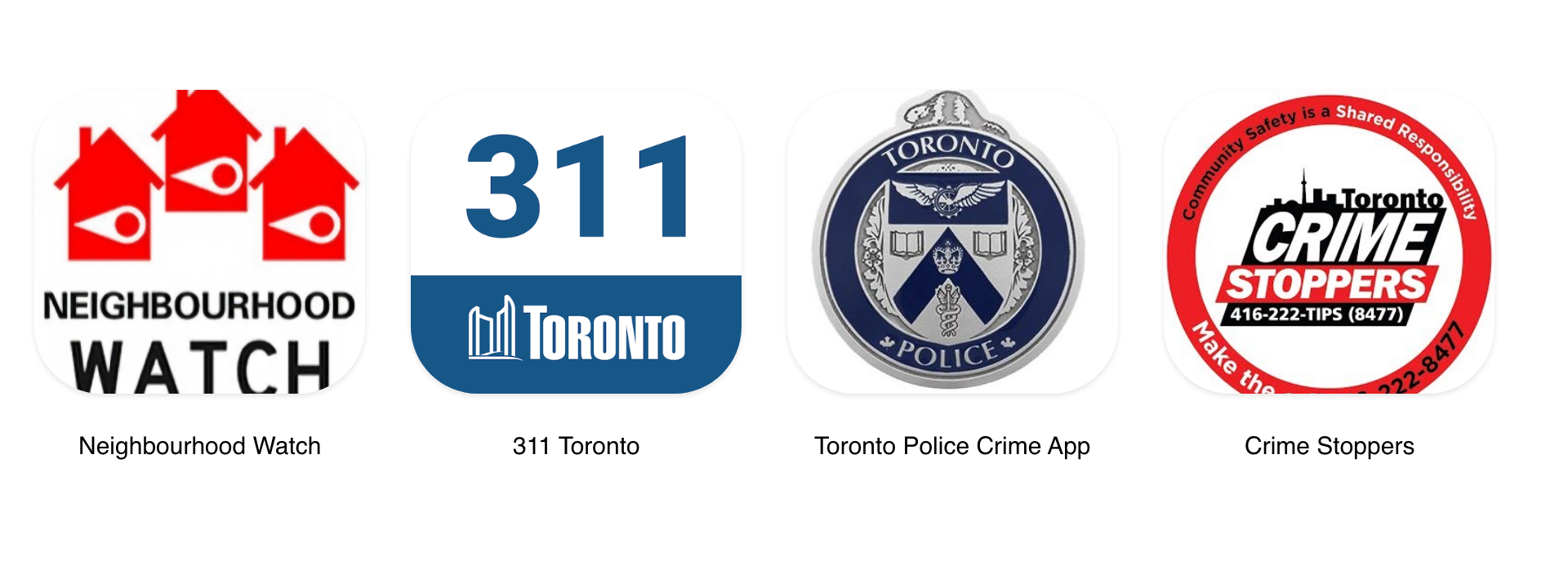
The current systems to address residential safety are Reactive instead of Preventative. They are not built around residential inquiries. They prioritize city concerns leaving residential safety concerns secondary.
This allows safety problems to remain unresolved and accumulate overtime. While lack of accountability and technology barriers remain a problem for residents.
Primary ResearchUncovering the absence of Residential Safety
To address the current state of residential safety, I employed both qualitative and quantitative research methods to gain deeper insights into residents’ concerns with safety. Using interviews, observational ethnography, and a survey ensured insights gathered were balanced, unbiased, and reflective of genuine priorities.
Benefits of Mixed Methods
Balances personal experience with broader data
Reduces bias through cross-validation
Surface insights no single method could reveal
Reflects the diversity of residents needs
Behaviour & Trust
Recalled incidents that made them adjust routines while avoiding areas and staying alert.
Residents believe communication improves safety but still values privacy, creating limits on how open they are.
Responsibility & Privacy
Residents will use protection measures but believe it invades privacy along with it being too expensive.
Residents placed responsibility for safety on local government and police rather than themselves.
Environment & Familiarity
Lighting, visibility, dead ends, dense pockets and how accessible an area is affects the overall sense of safety.
Residents expressed pride in long-term ties to their neighbourhood. Familiar faces makes them feel safer.
Who are we Designing for?
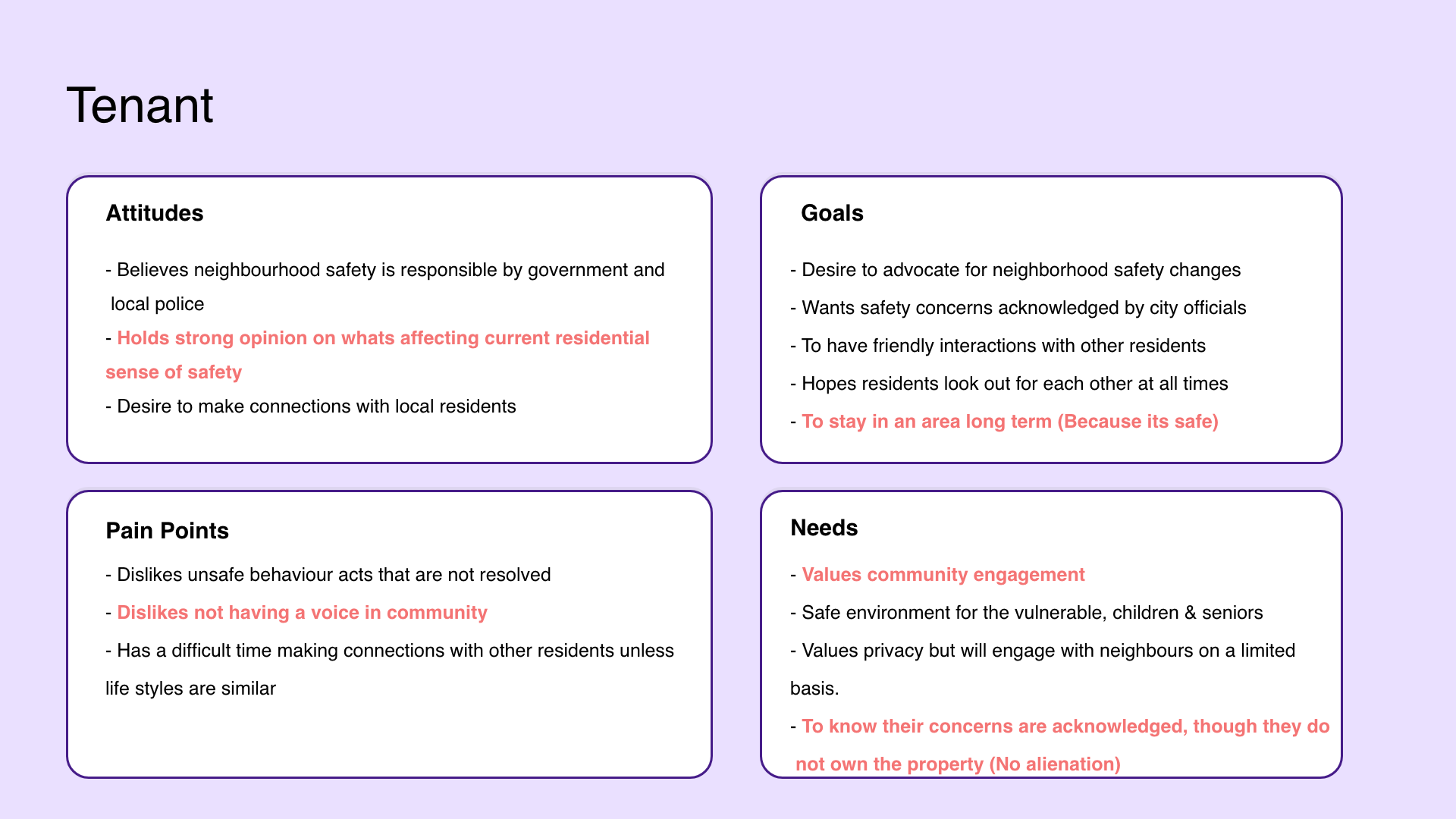
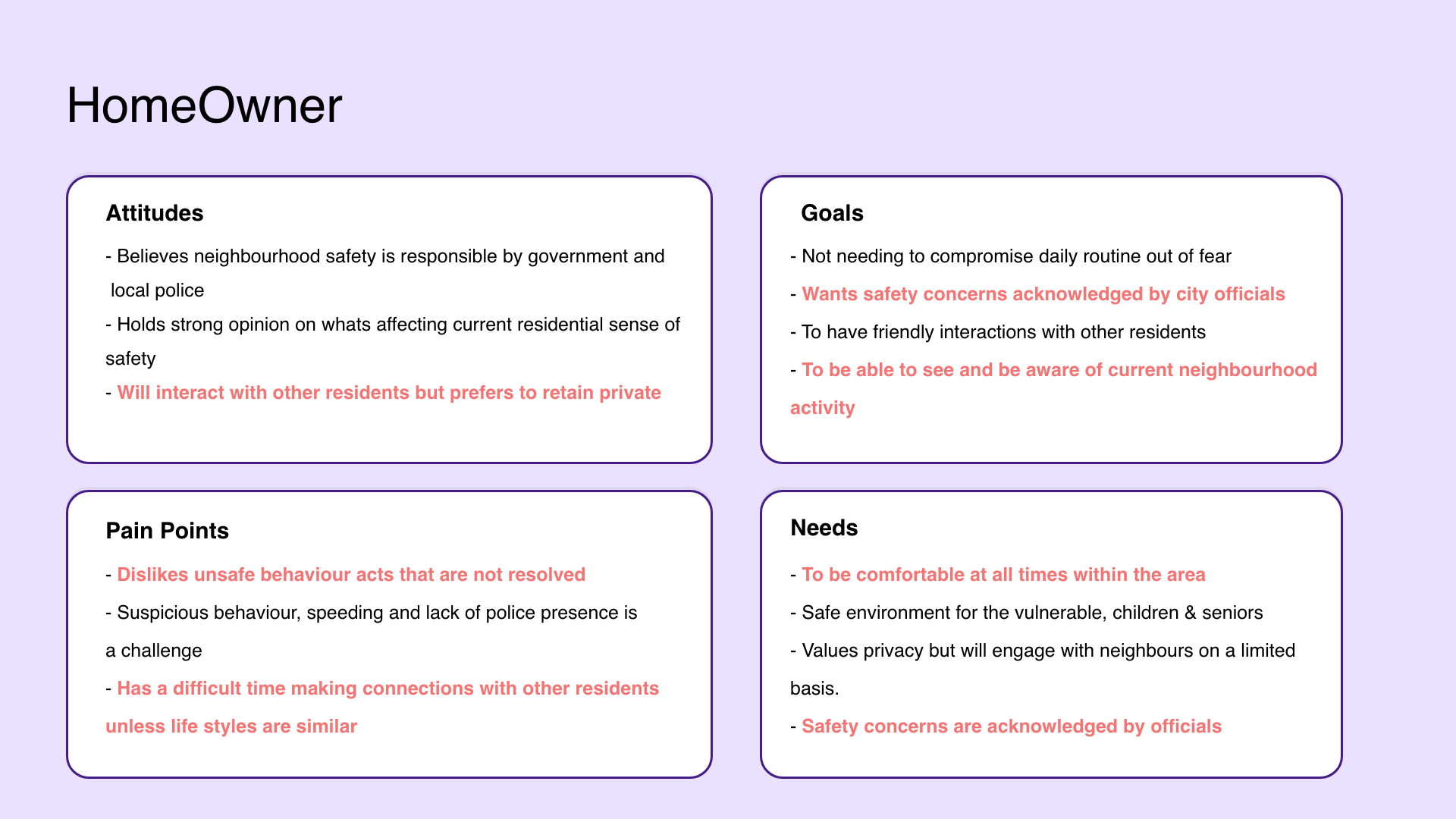
To represent those affected and who we are designing for, I created two personas - Homeowners & Tenants.
Understanding the current System
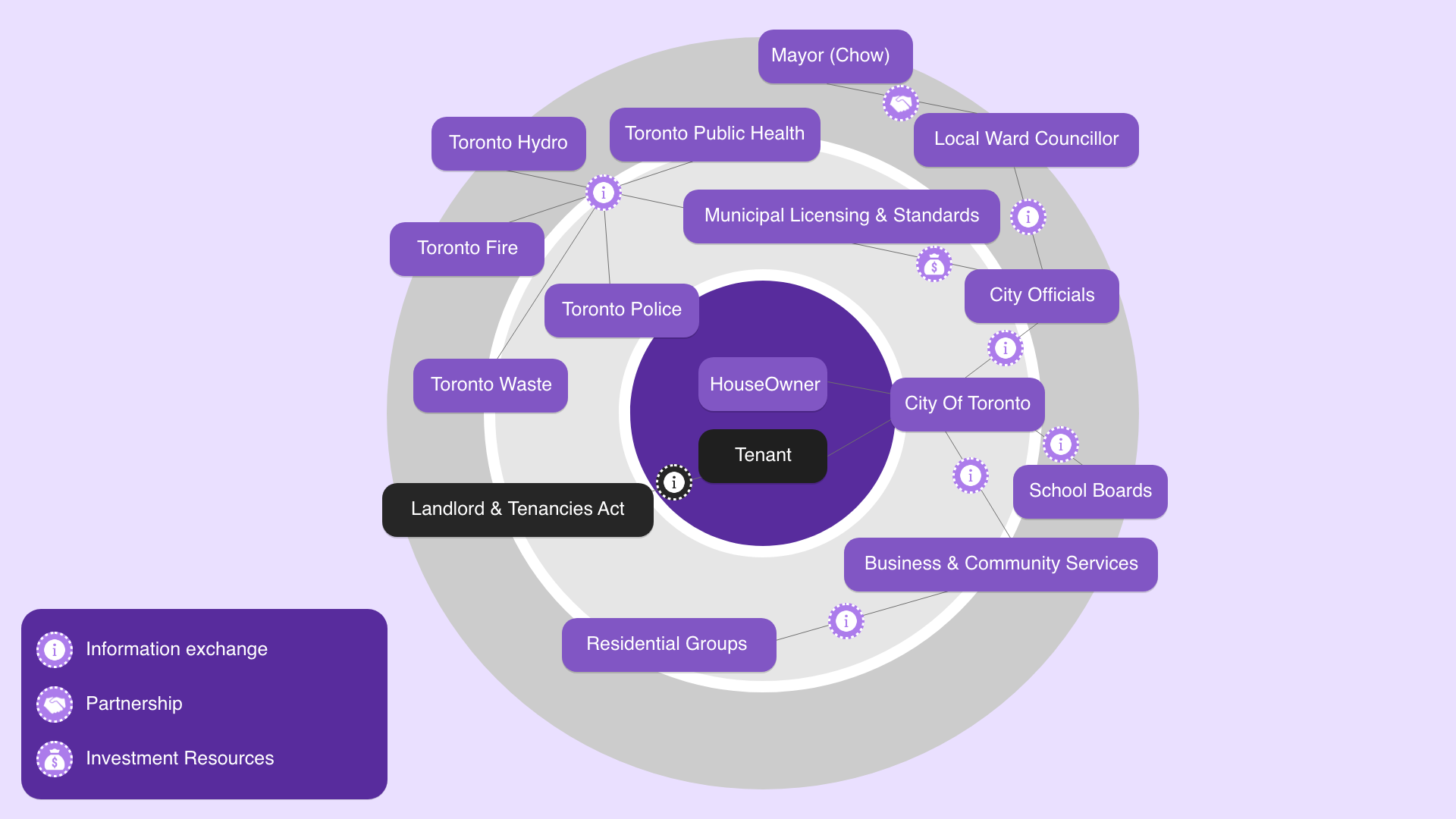
Then I created a stakeholder map to identify who currently contributes and influences residential safety in the Greater Toronto Area - from government bodies to residents themselves.
Mapping Out Task Flows
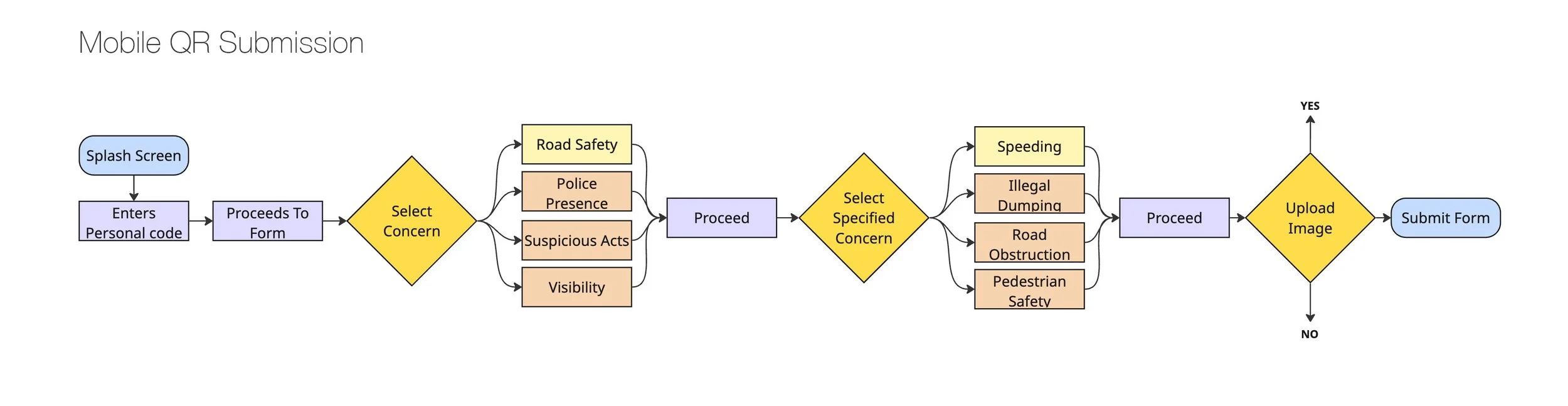
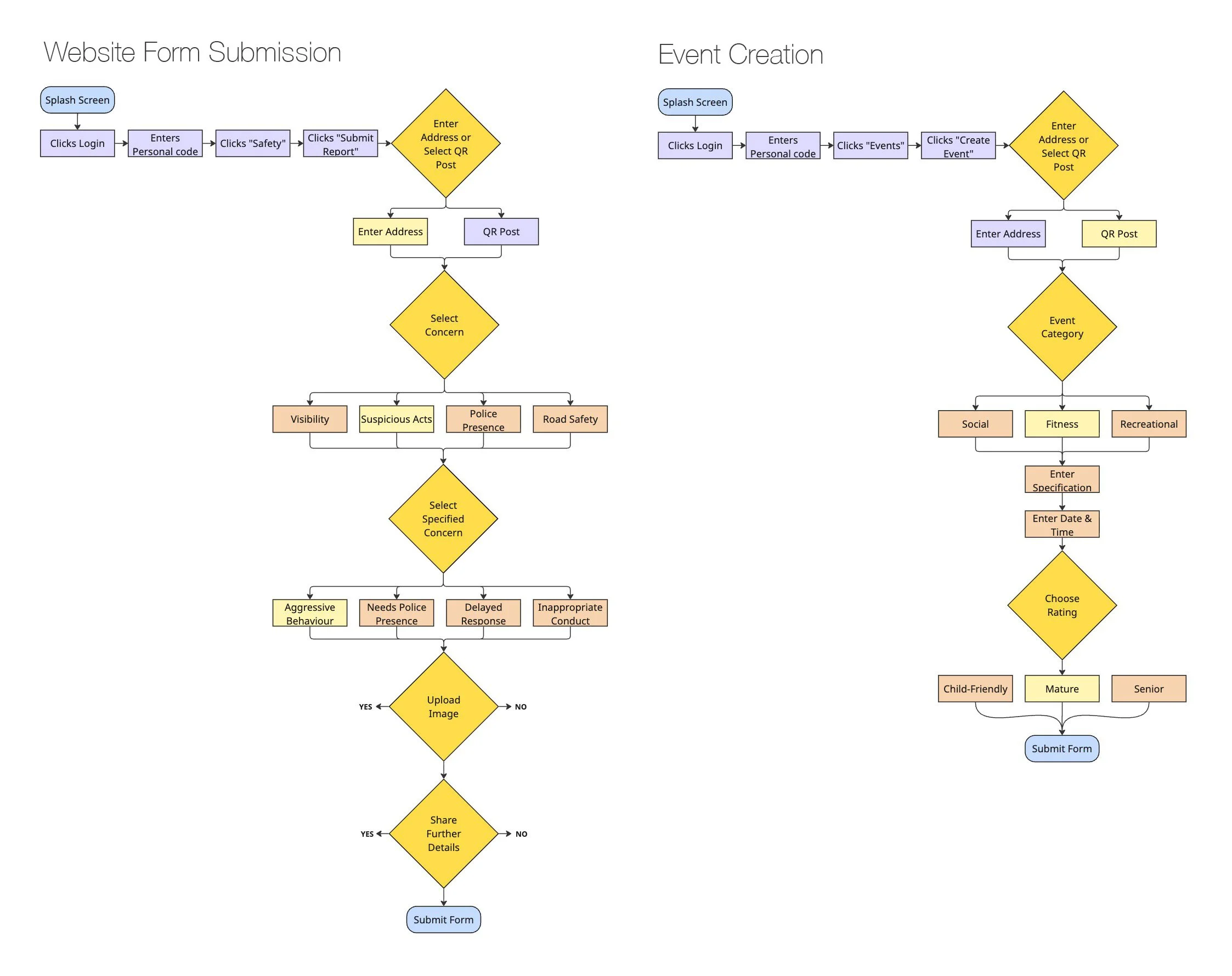
3 primary user flows has been created to map out the specific task InTouch provides. This will guide us in the development of sketches without having to backtrack and reiterate.
Core Features
QR Post Submission
Website Report
Create Events
Designing the interface
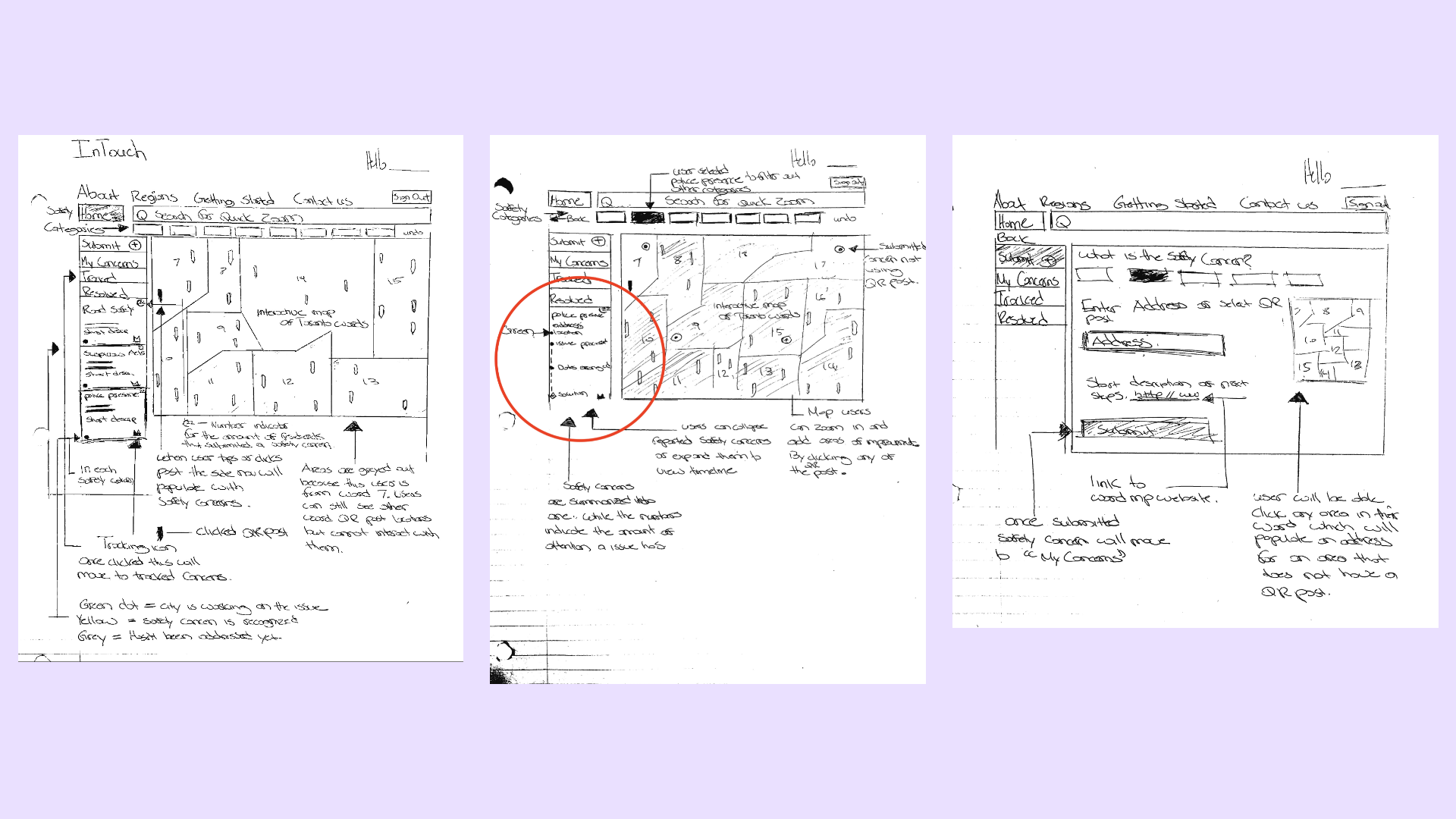
I then began brainstorming, my goal is to have primary and secondary features, enabling a memorable and seamless experience. These particular sketches reflect the residents personal hub, where they can view, track, report a concern and participate in community events.
Core Features
Track local issues
Report Concerns
Participate in regional events
FINAL DESIGN
A service that prioritizes safety and sustains communities.
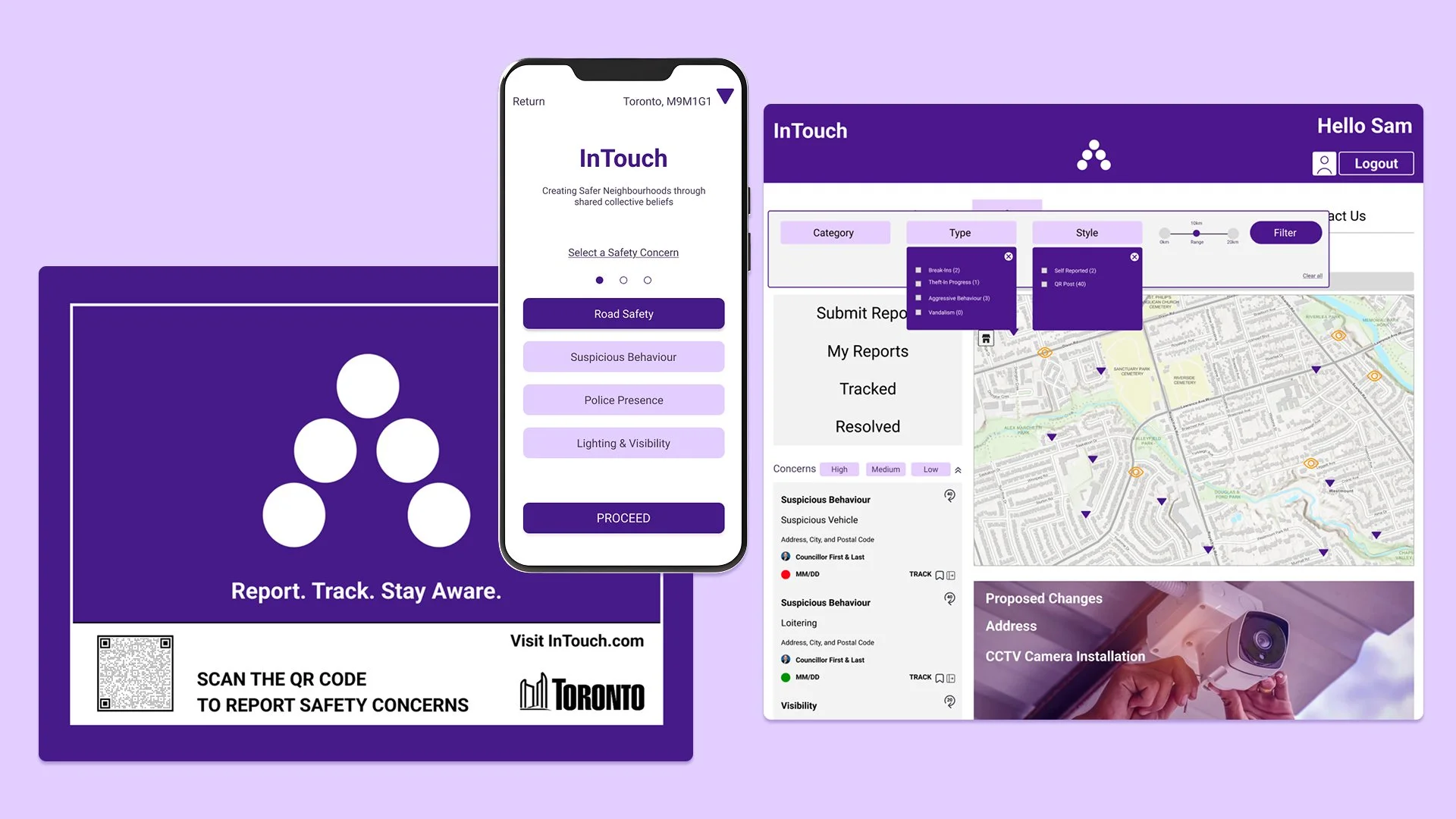
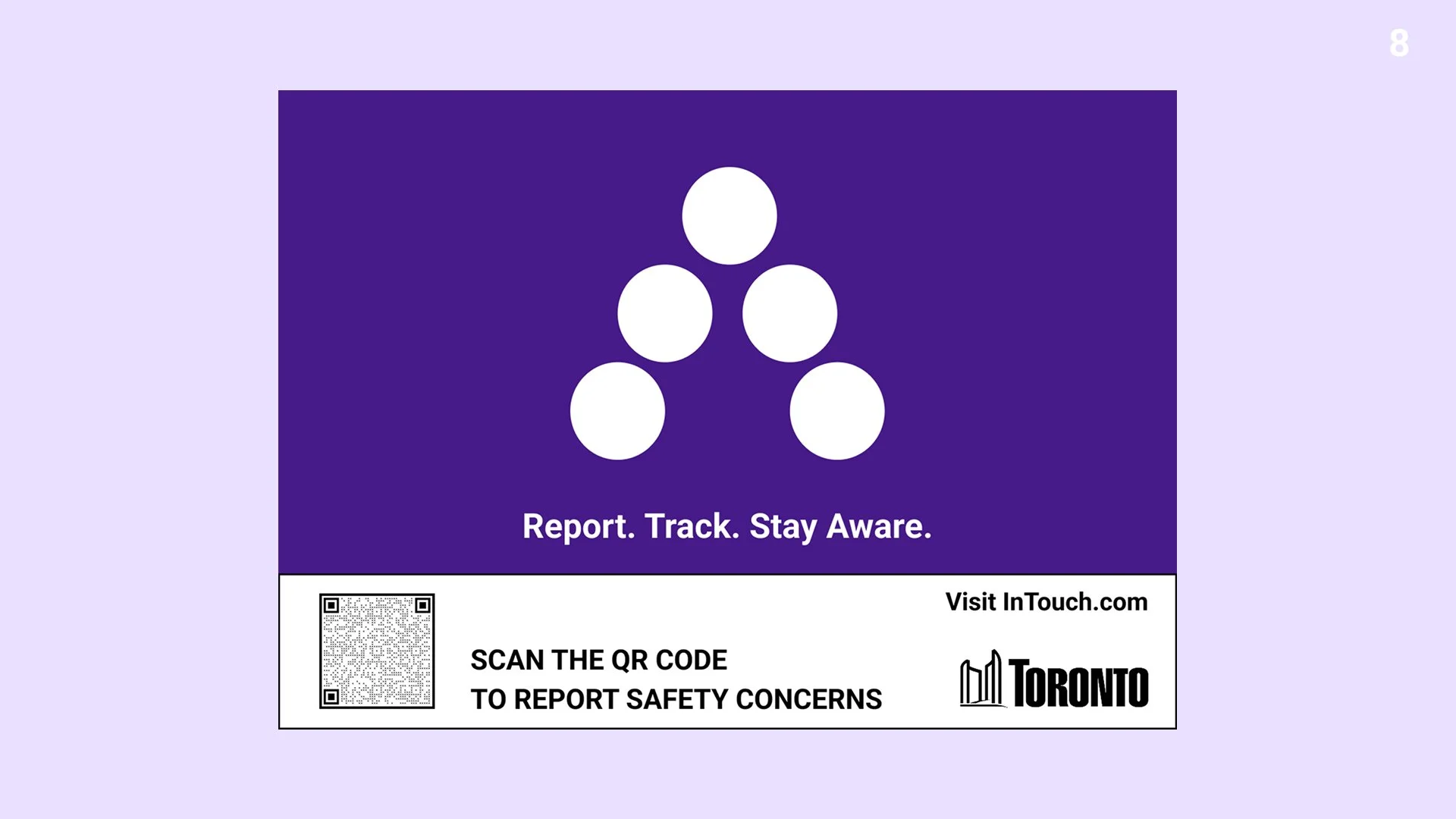
THE QR Post
The QR Post are physical signs stationed in various areas within residential spaces. Enabling fast efficient reports.
Why does this matter?
Immediate Safety Submissions
Encourages authentic interactions
Lets intruders know neighbourhood is partnered
Mobile QR Reporting
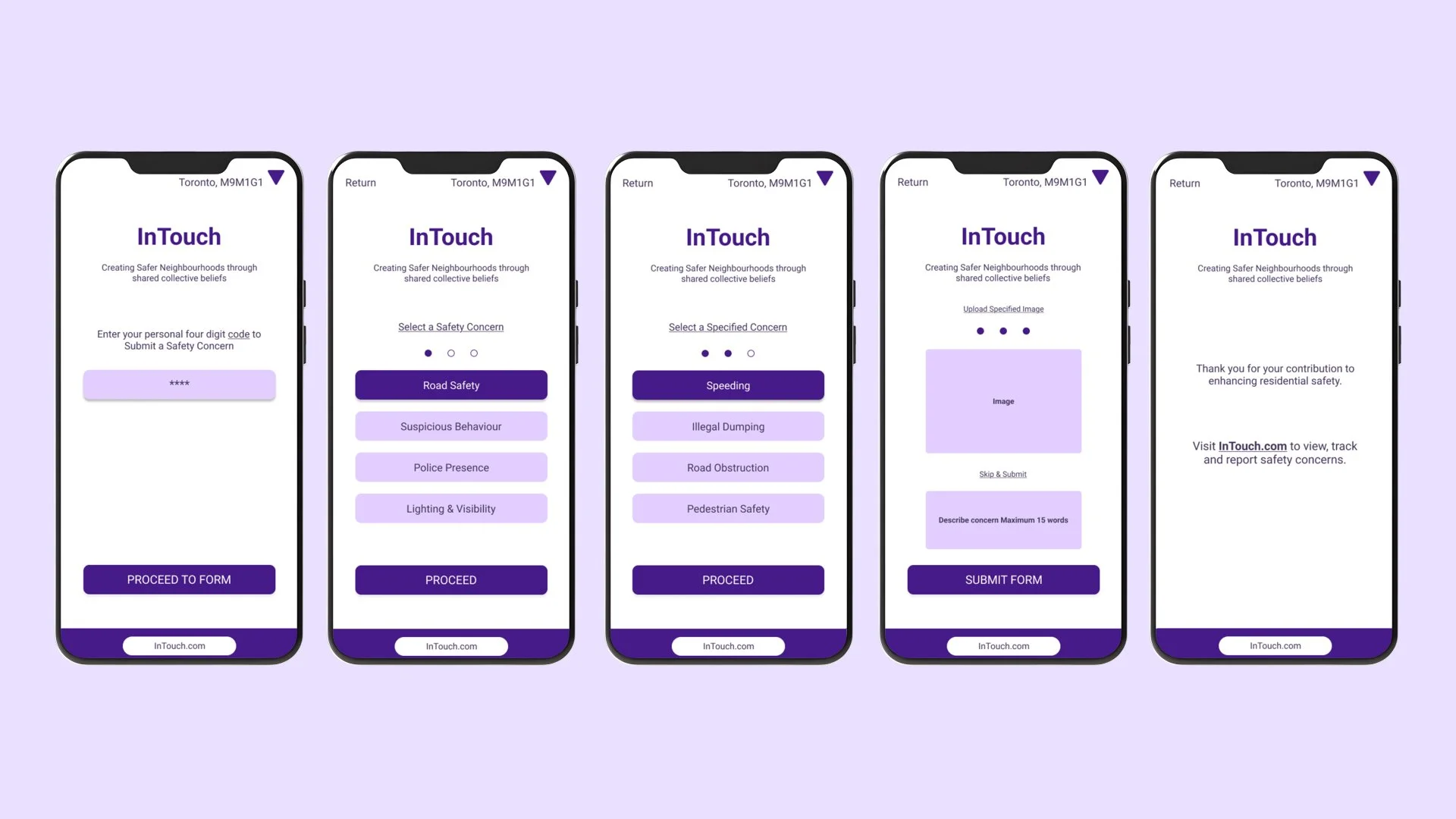
The mobile form enables users to report safety concerns by including imagery and a short description of the issue. Depending on the user’s choice, the categories will automatically change.
This flow represents a user submitting a road safety speeding concern.
Staying aware of “My Reports”
Upon submitting a report, users can track its status in real time and see how the city is actively responding to their concern.
Why does this matter?
Cities demonstrate accountability through visible action
Trust between communities and local government grows stronger
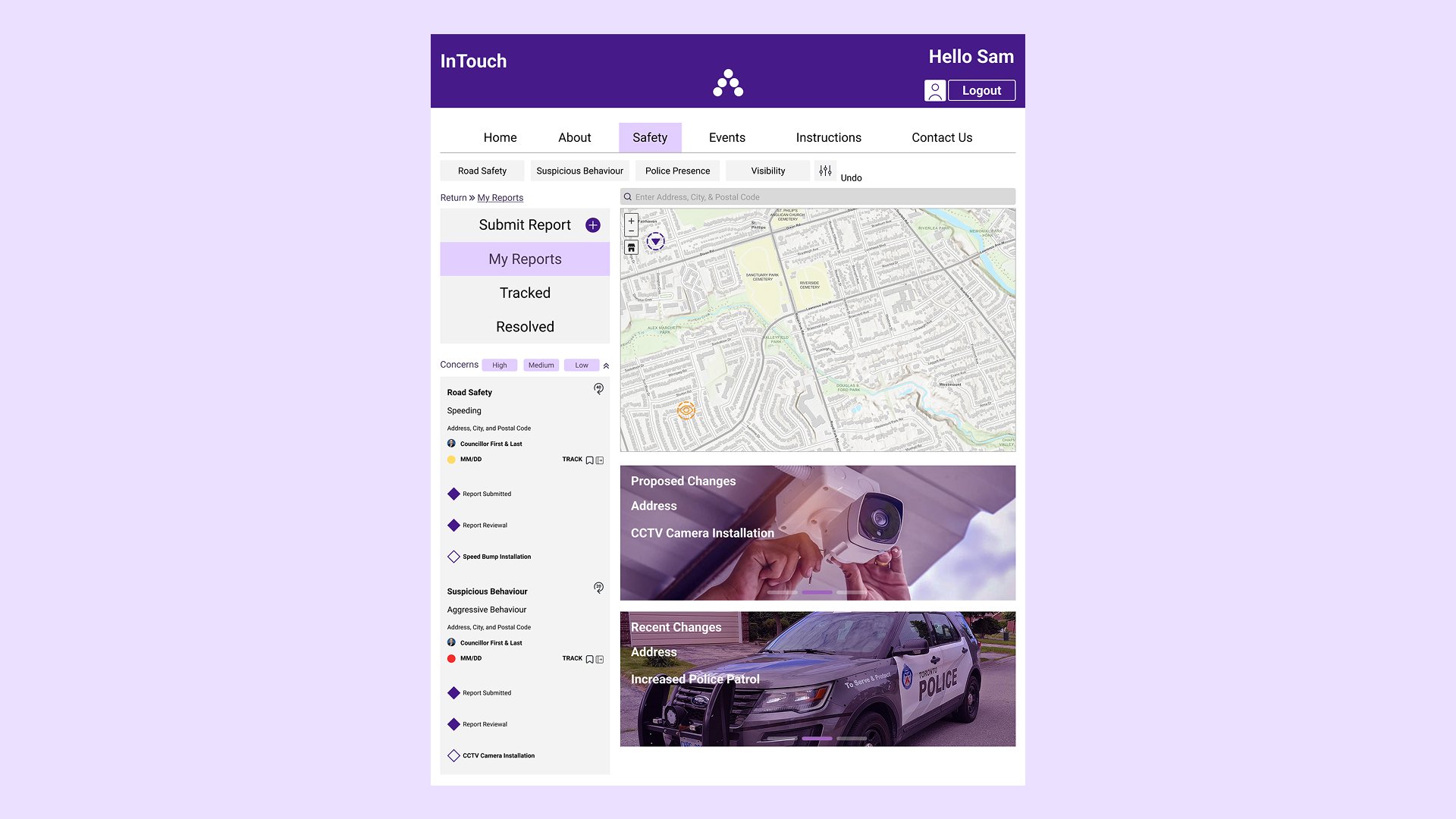
Safety Hub
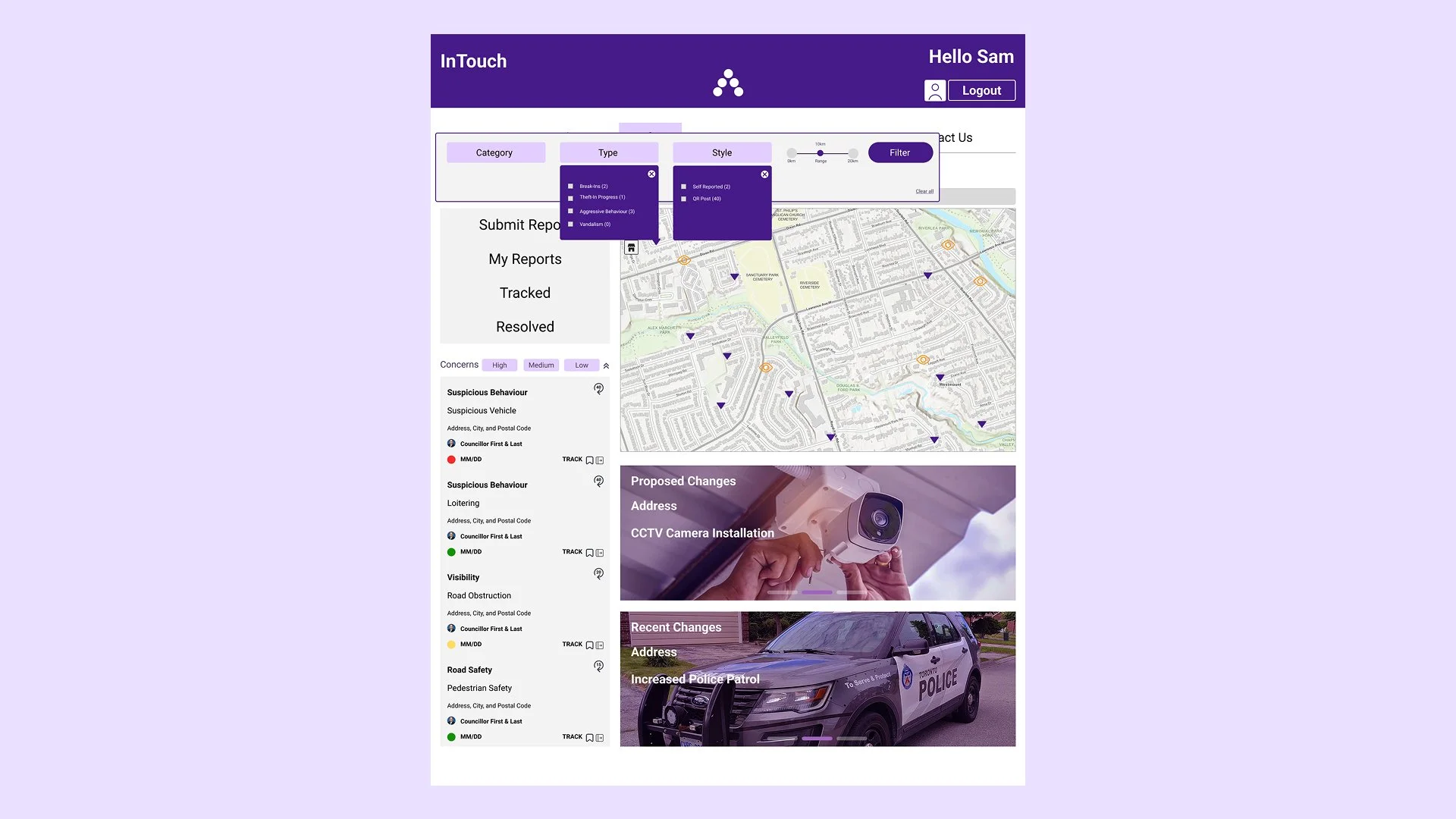
The safety page allows users to browse categorized reports, filter by urgency, and stay updated on proposed and recent changes in their ward.
Why does this matter?
Filtering by urgency helps residents focus on what matters most to them
Residents get a clear, organized view of what’s happening in their community
Event Hub
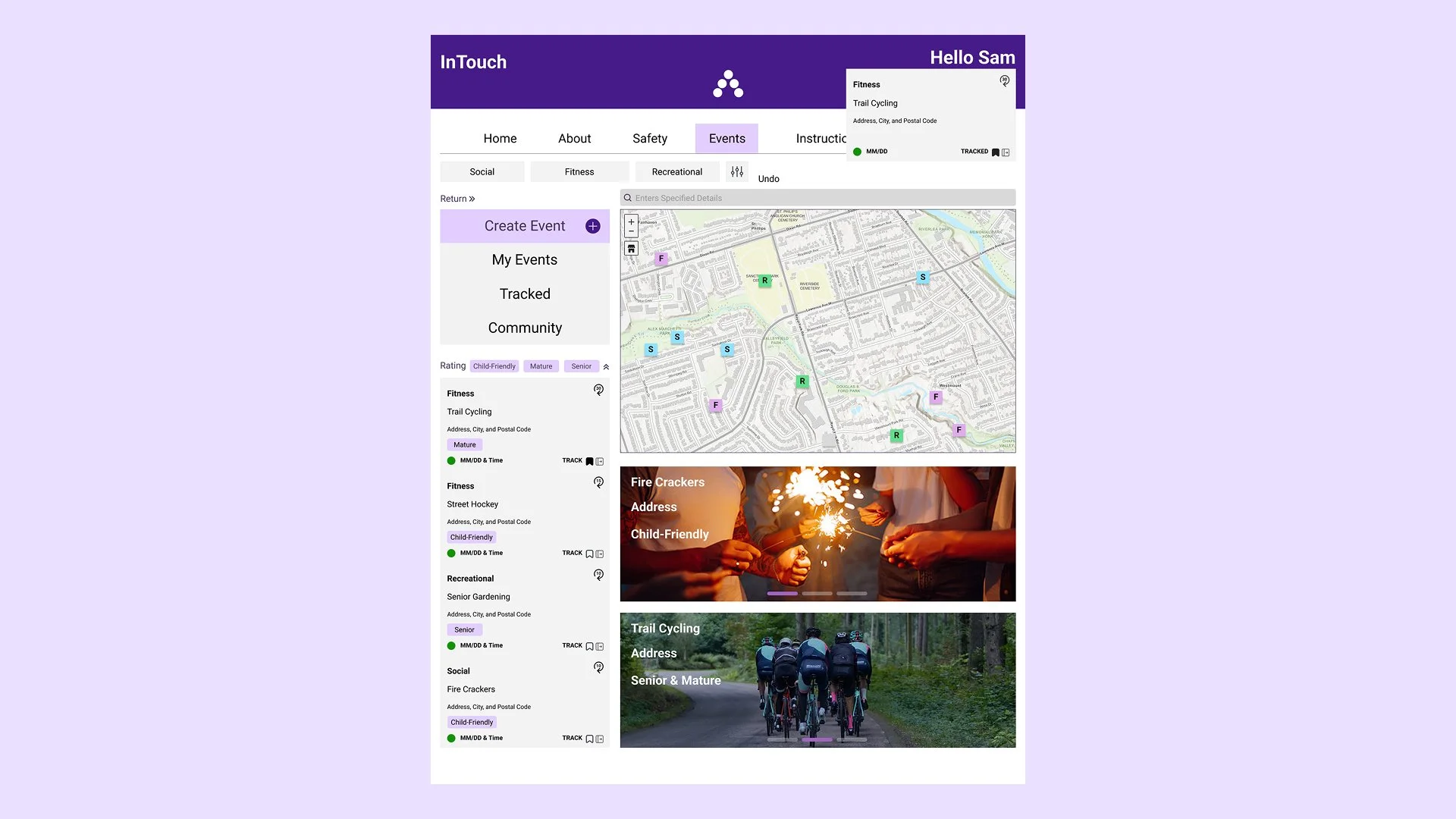
The events page enables users to create and track community events, filter by audience, and discover highly active local initiatives tailored to themselves and their ward.
Why does this matter?
Neighbours can easily find and join events that are relevant to them
Highlighting active local initiatives encourages greater community participation
Business ImpactBy collectively addressing safety concerns, residents build stronger connections and trust beyond reporting.
TAKEWAYS