Humber College
Addressing Students Mental Health
TIMELINEJan - March 2025
DELIVERABLESStudent wellness mobile application
ROLEMyself, Cassandra Mackenzie, Sanah Amba
METHODSCompetitive Analysis, Heuristic Evaluation & Survey
CONTEXTOften students at Humber College face challenges with their mental health and wellness, often unaware of the support services available on campus. The Centre for Innovation in Health & Wellness (CIHW) approached us to research and design an application that could help students
CHALLENGE
How might we address the mental challenges students face while attending Post-Secondary?
THE SOLUTION
The solution focuses on creating an interactive and calming digital space that encourages students to reflect, express, and manage their mental well-being through personalized and engaging experiences.
Conducting
Research
Research Questions
What are the current limitations and challenges that students face when dealing with mental health?
How are the current apps meeting the needs of students?
What are the current methods student use to cope with mental health challenges
How can these methods be incorporated into an app?
Survey Questions
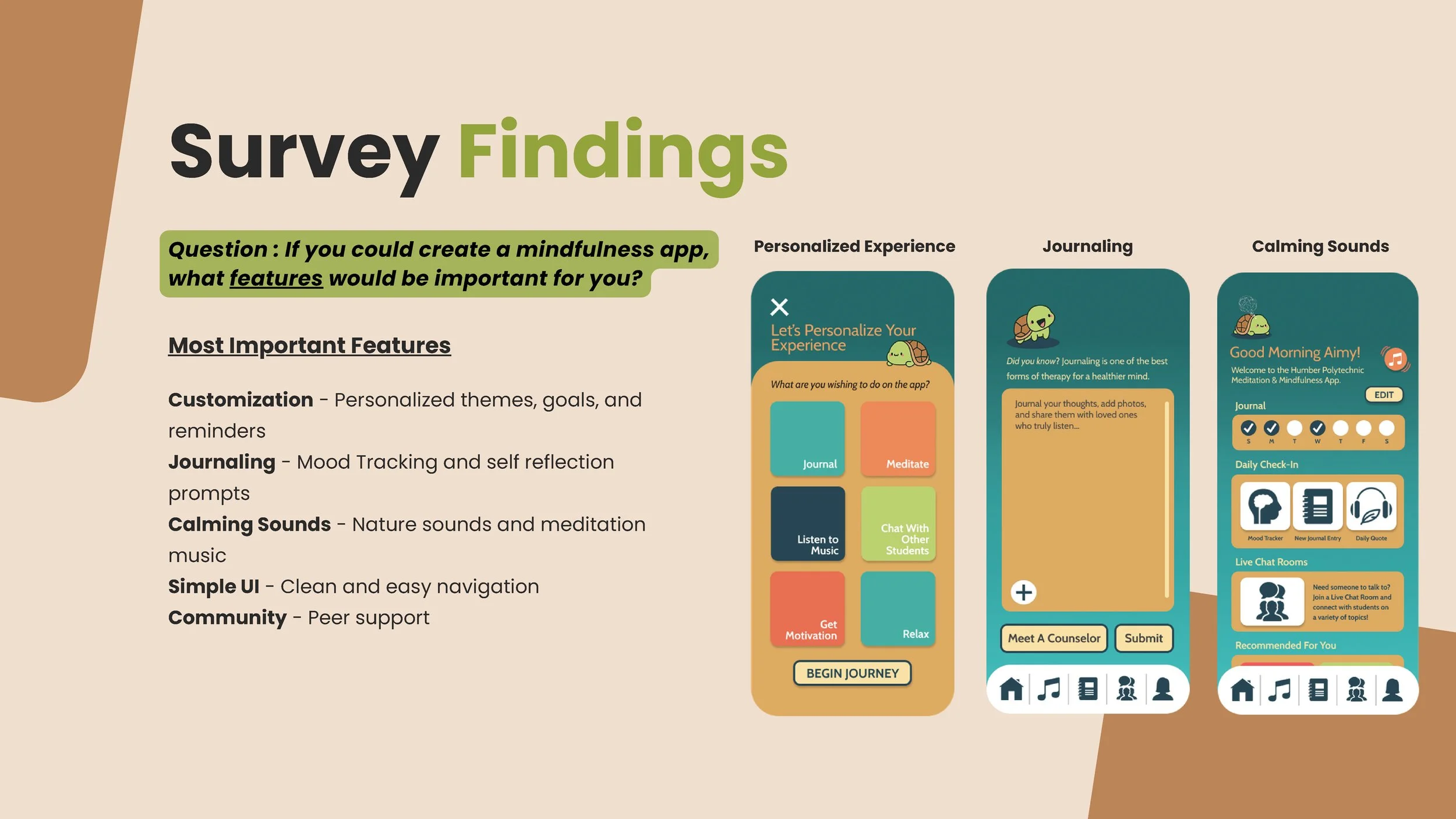
If you could create a mindfulness app, what features would be important for you?
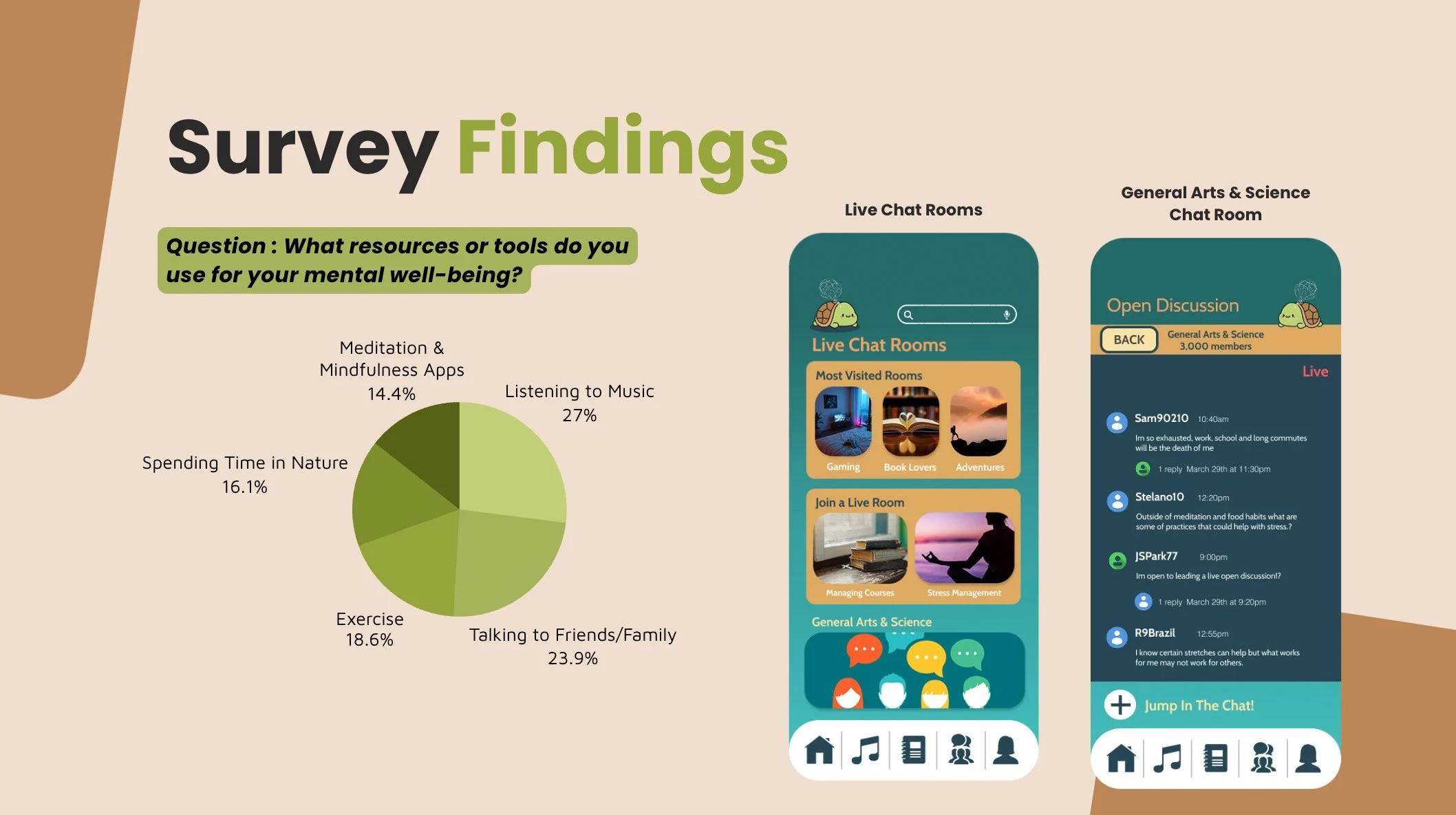
What resources or tools do you use for your mental well being?
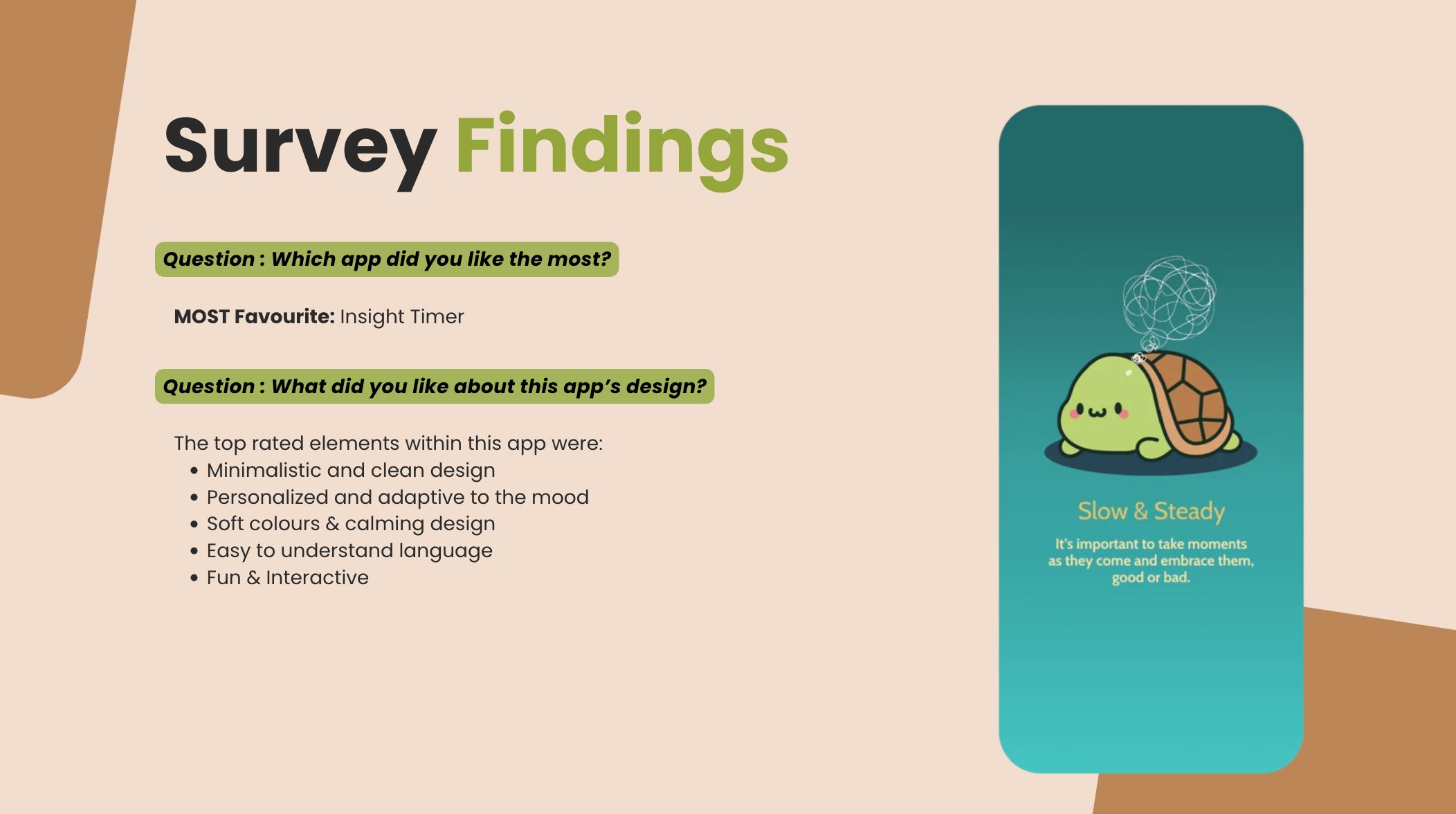
Which app did you like the most?
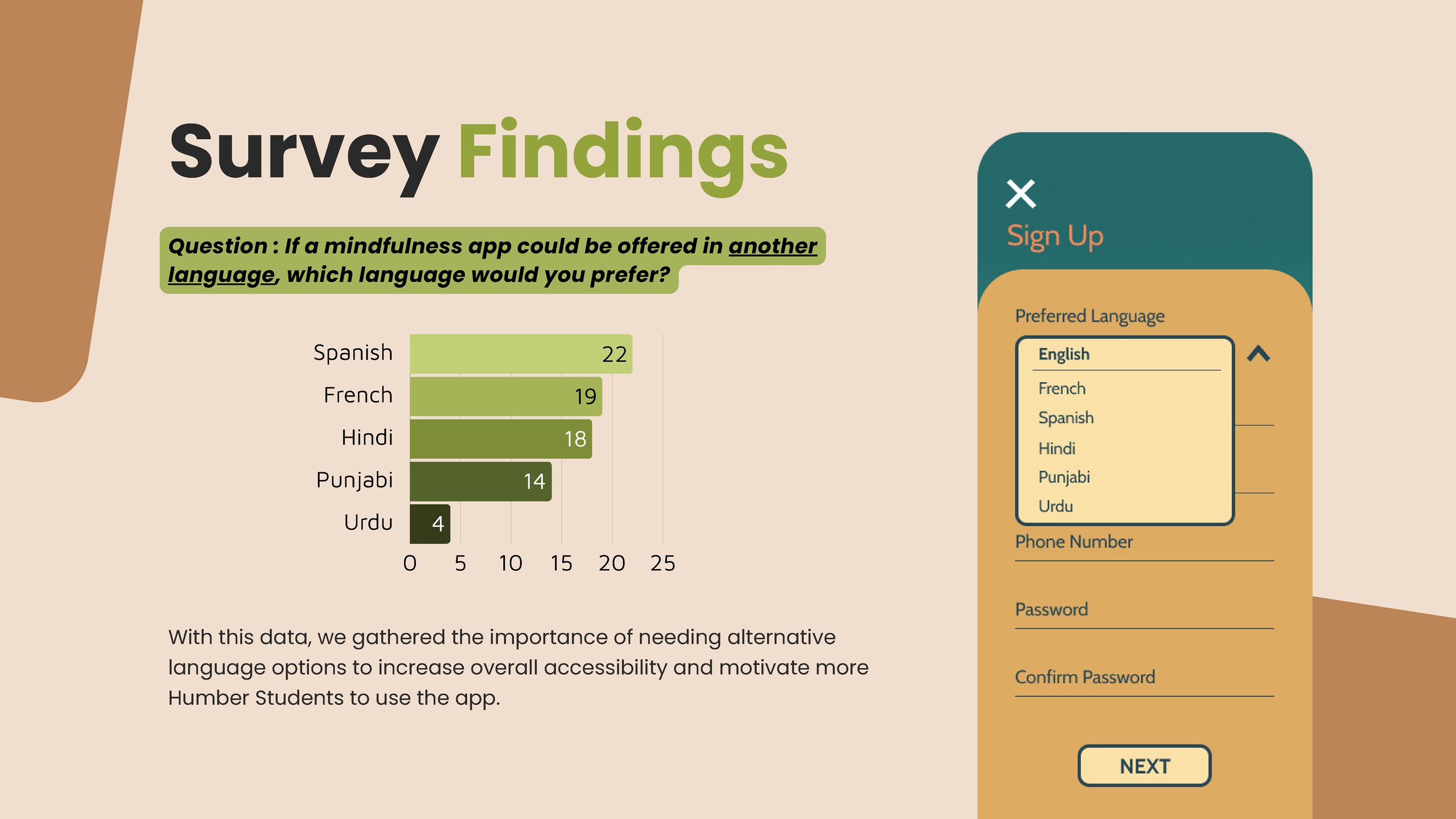
If a mindfulness app could be offered in another language, which language would you prefer?
Analyzing the Competitors
A Swot Analysis and Heuristic Evaluation was conducted between 4 trending Mental Wellness apps. The purpose was to identify strengths and weaknesses.
Criteria
Features
Structure / Layout
Navigations
Accessibility

Heuristic Evaluation Findings
From looking at competitors
Strengths
Extensive wellness resources including meditation and mindfulness tools
Customization features that adapt the experience to individual users
Positive guidance and affirmation that support mental well-being
Reward systems that encourage consistent engagement
Weaknesses
Many core features require a paid subscription
Too much information presented to first-time users
Lacks interactive features to sustain user engagement
Minimal opportunities for social connection or community interaction
Survey Key Findings
We then conducted a survey with 130 participants of Humber alumni to gather feedback on the existing mental wellness apps, aiming to identify applications core strengths and weaknesses.
This allowed us to gain insights into participants’ needs when creating a wellness application
What Does the Data Reveal
Understanding the Students
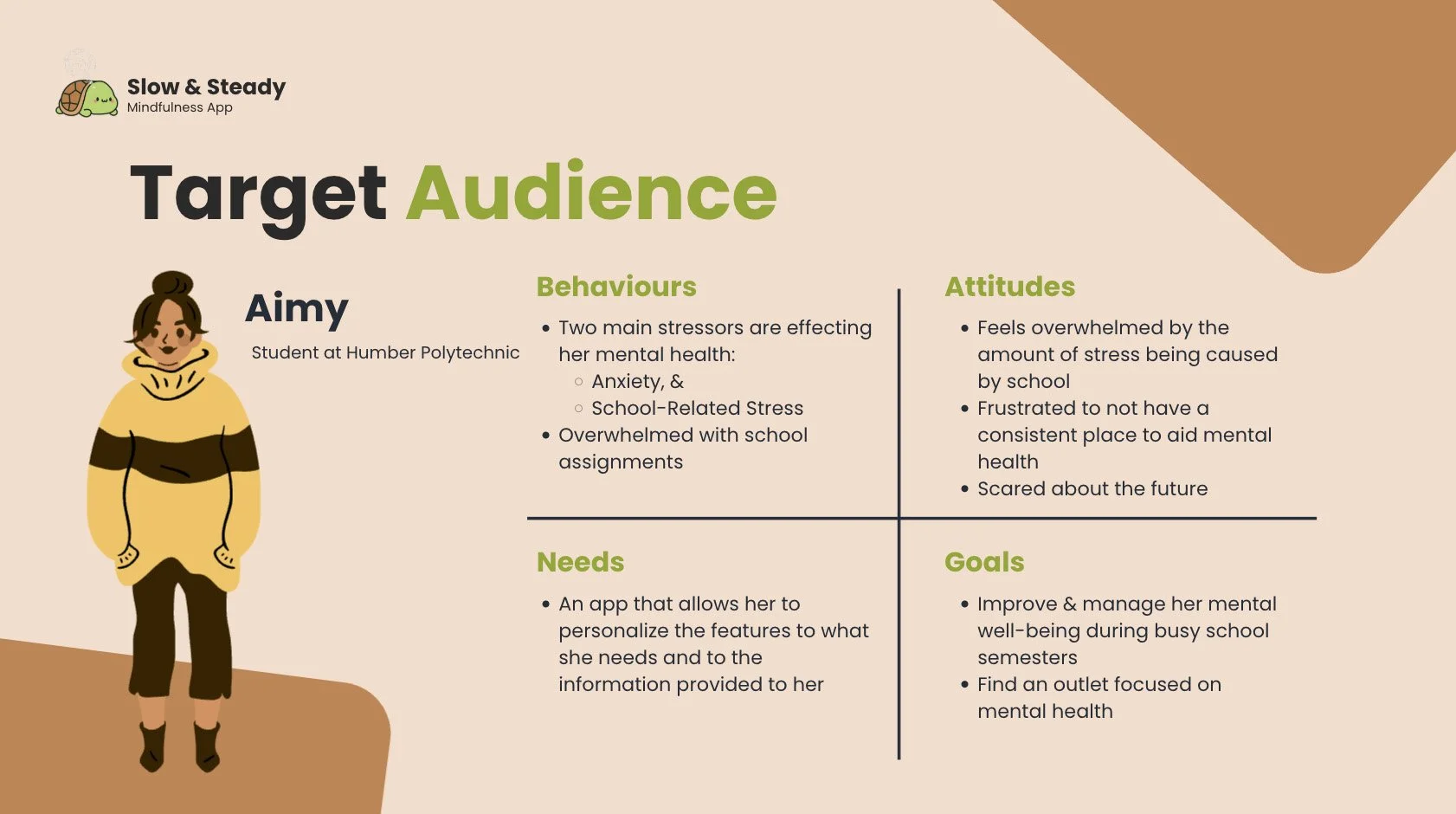
To stay focused on target audience, we developed a persona that captures their key demographics, behaviours, pain points and needs
Prioritizing the User Experience
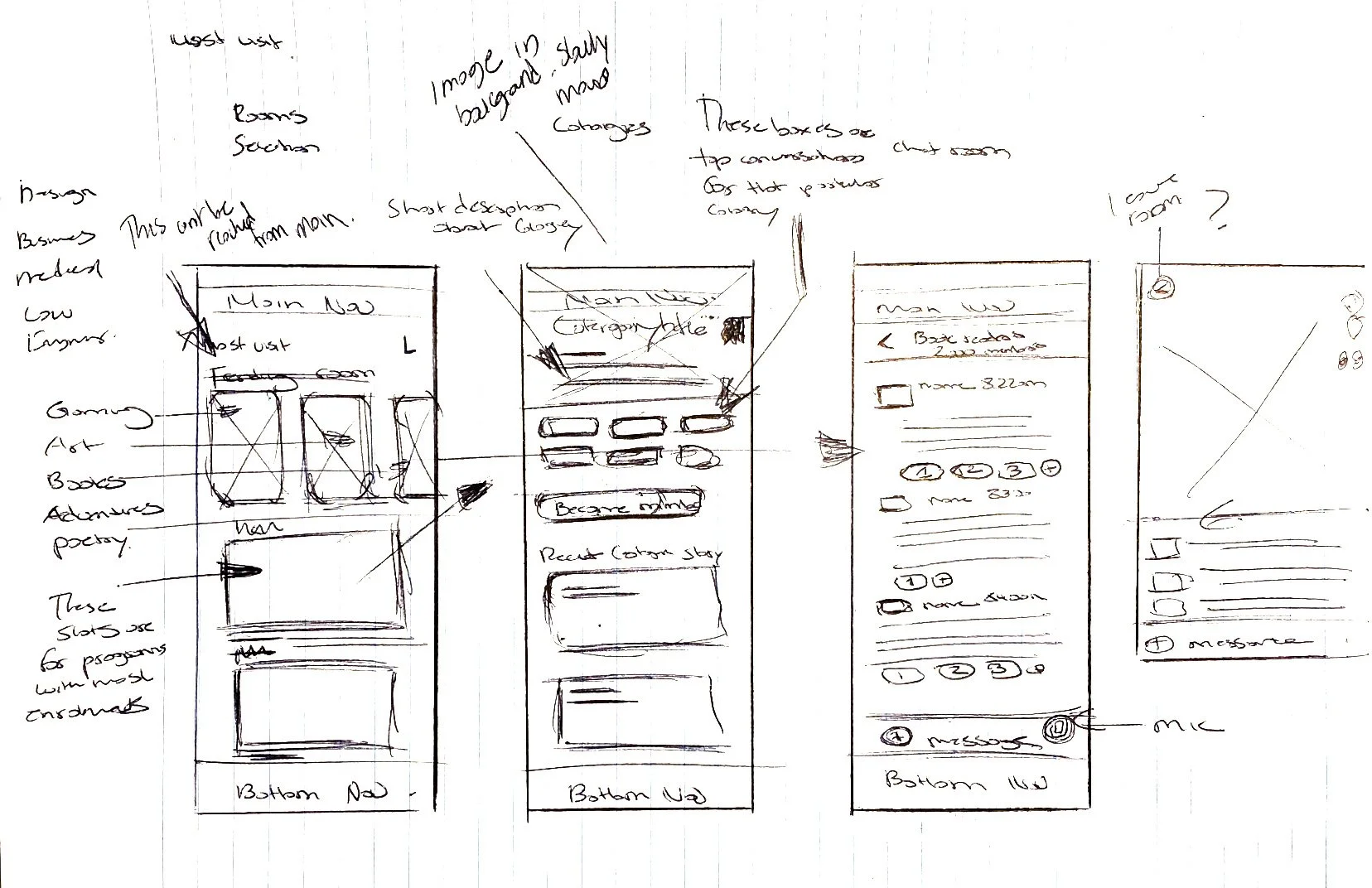
We than began brainstorming, our goal is to have primary and secondary features, enabling a memorable and seamless experience. Starting with the Live Chat rooms, designated for different program
Core Features
Mood tracker
Journal entries
Live chat rooms
Wireframes to Digital
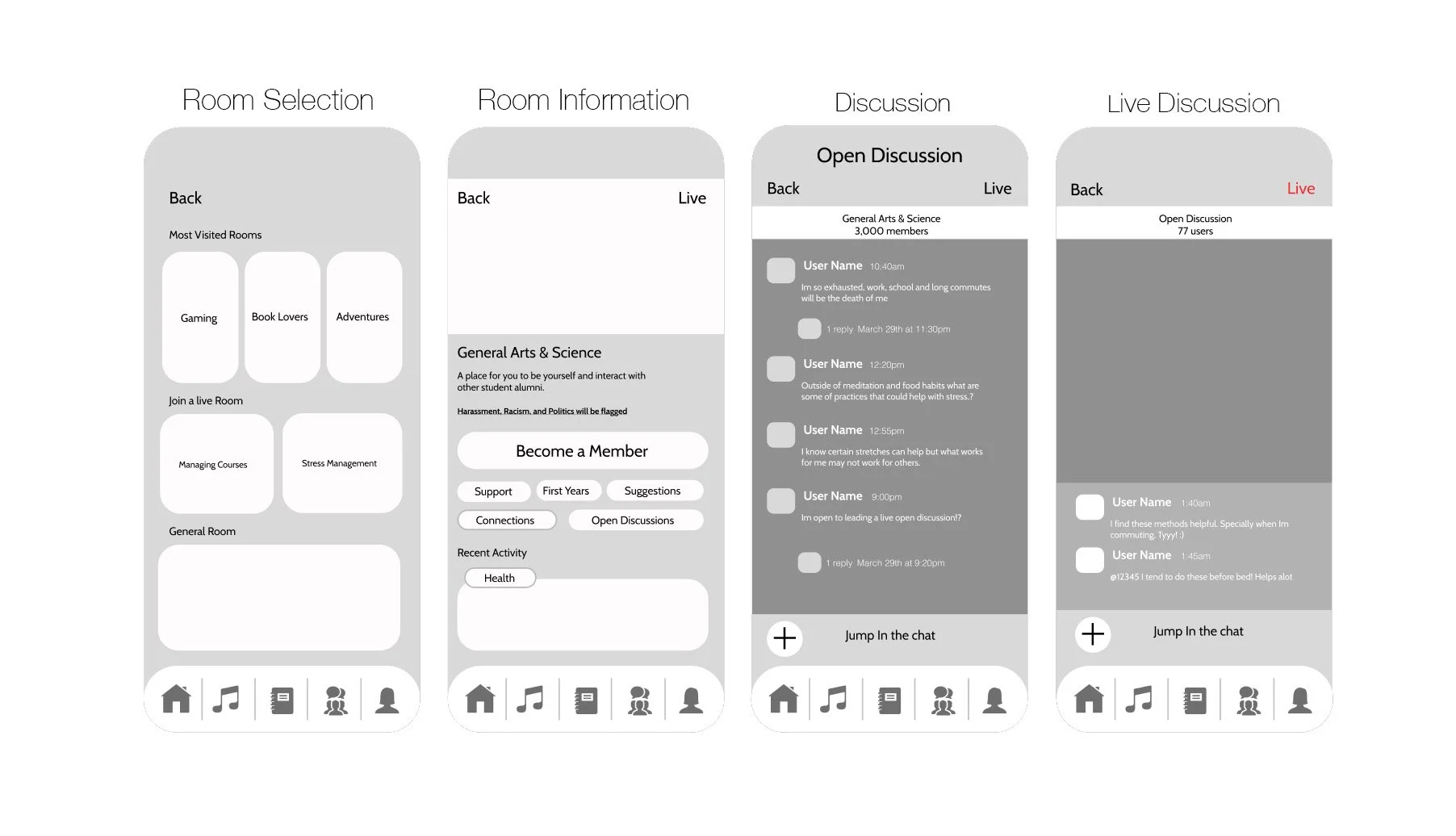
The next step was recreating our initial sketches into low-fidelity wireframes using Figma. This wireframe represents the Live Chat Rooms.
Design Tile
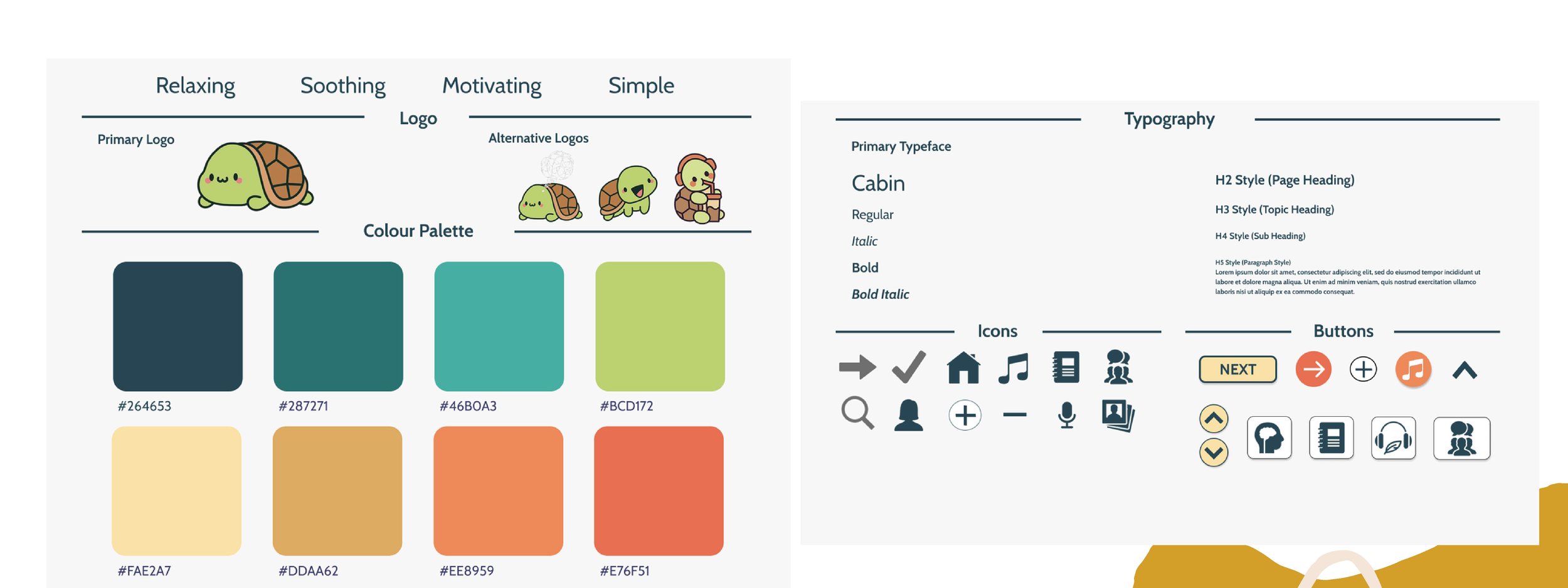
To add visual appeal to our design, a style tile was created to get a better look and feel for what the interface would like like
THE DELIVERABLE
An app that encourages mental health and sustain communities
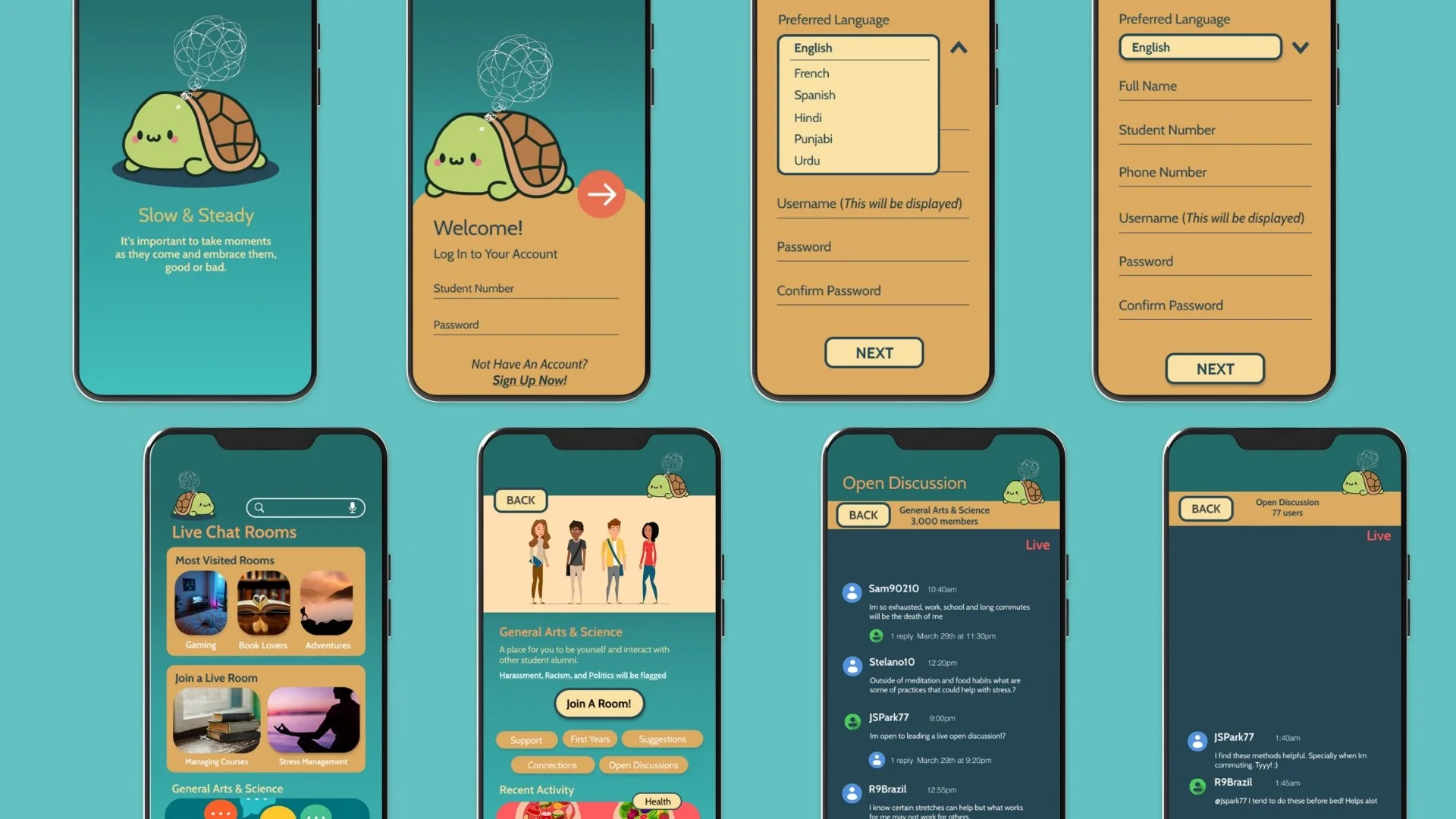
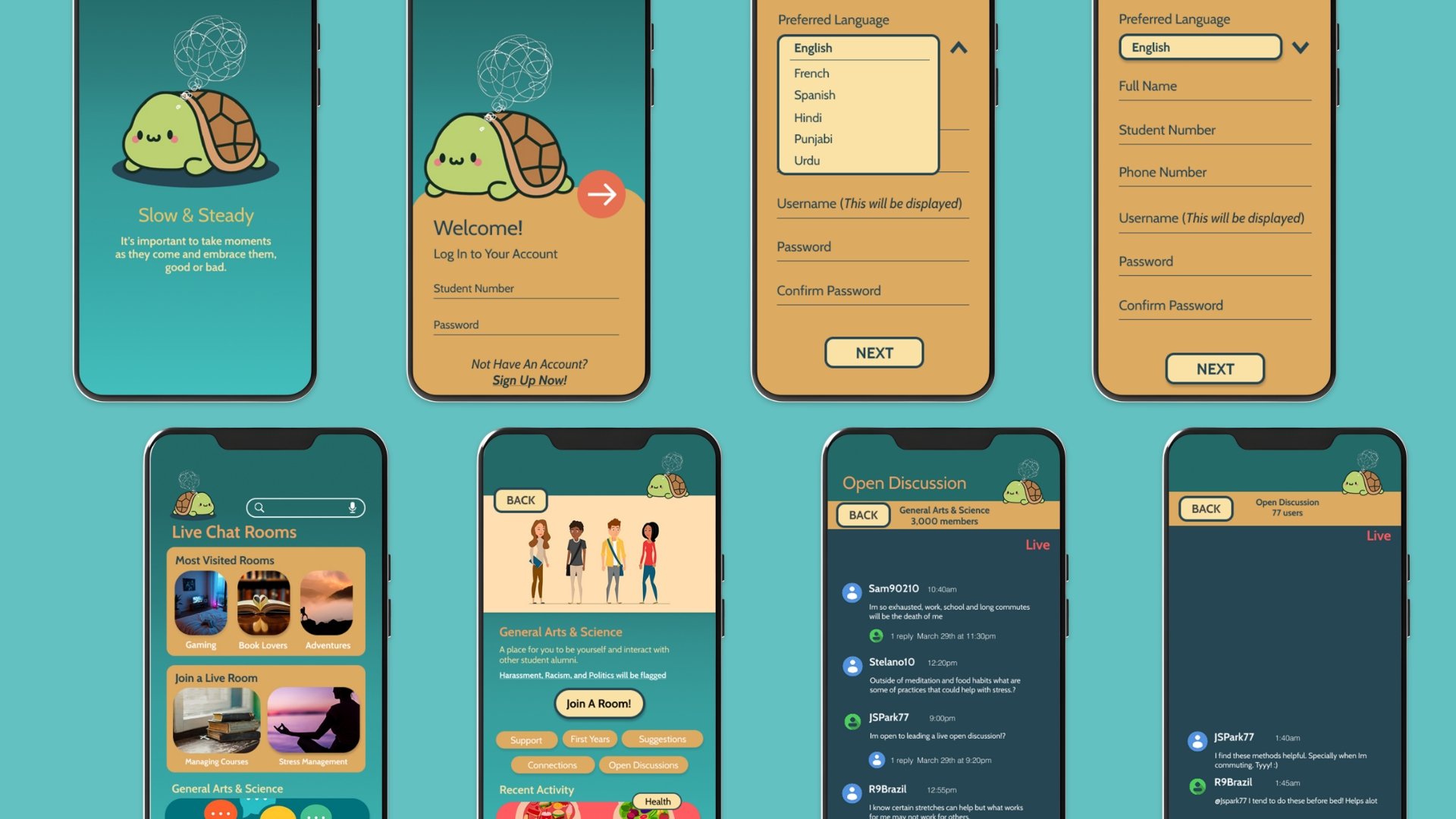
Onboarding Process
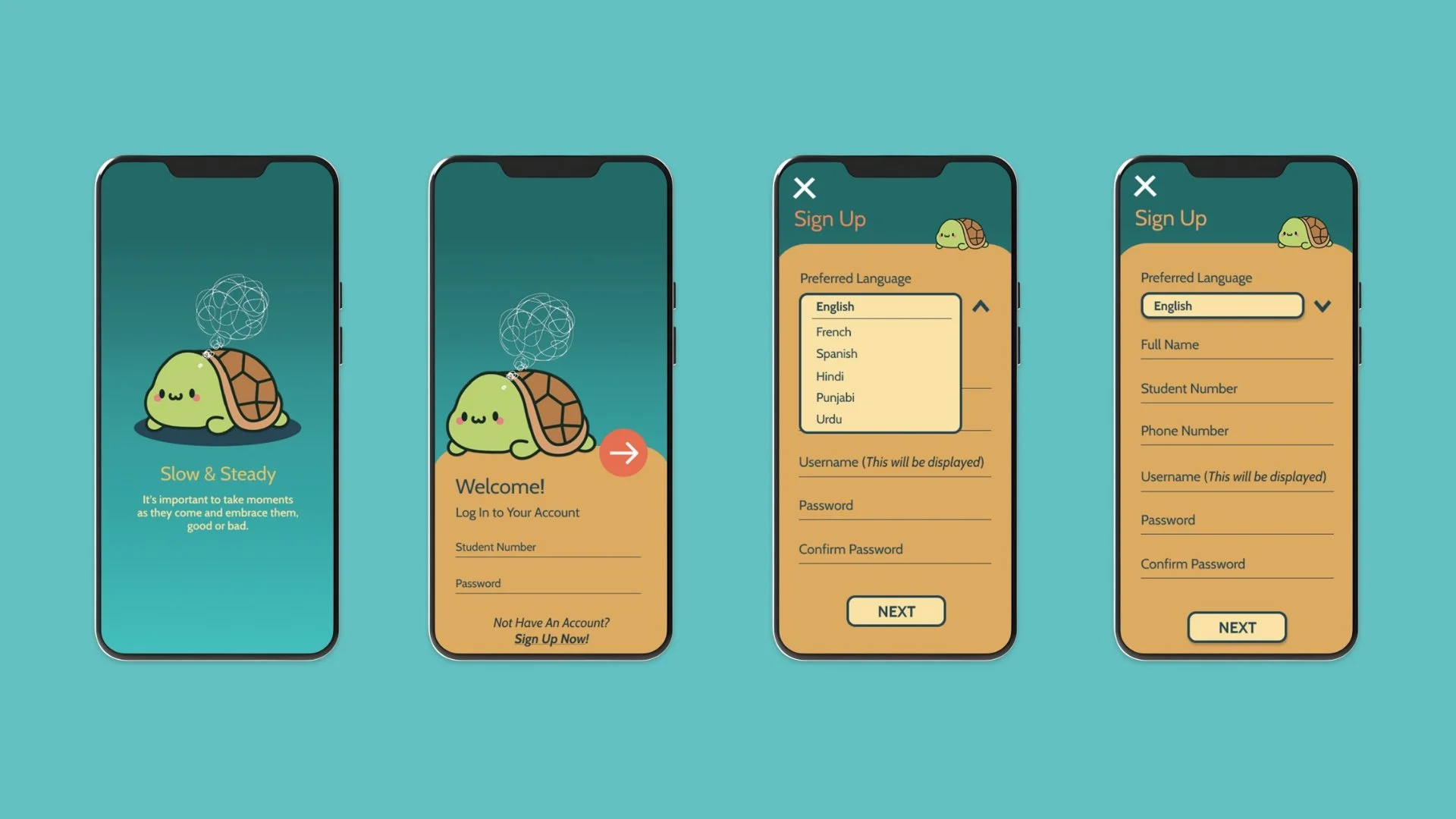
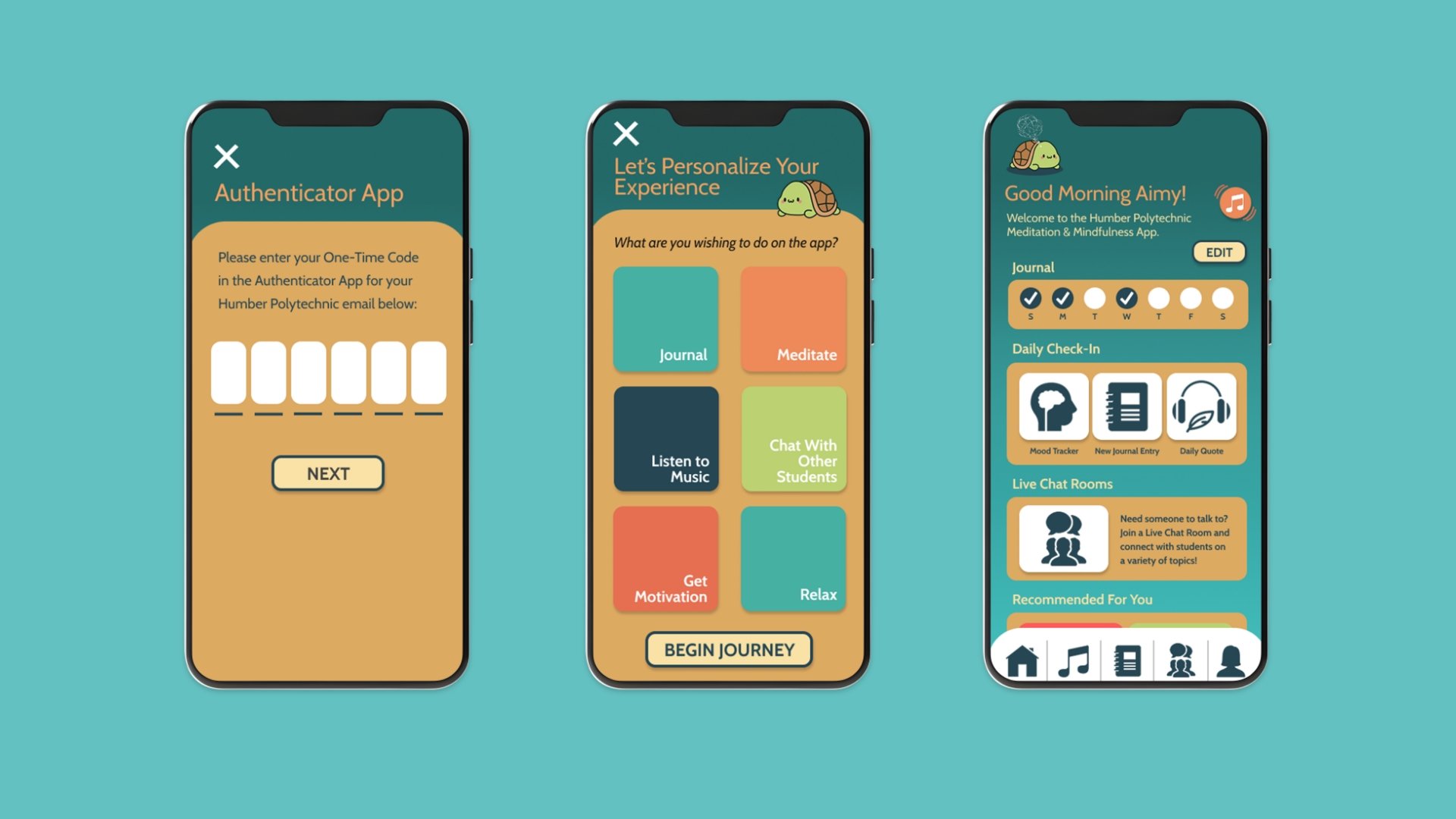
When users create a new profile, they have the opportunity to choose which features they are most interested in using to customize their home screen.
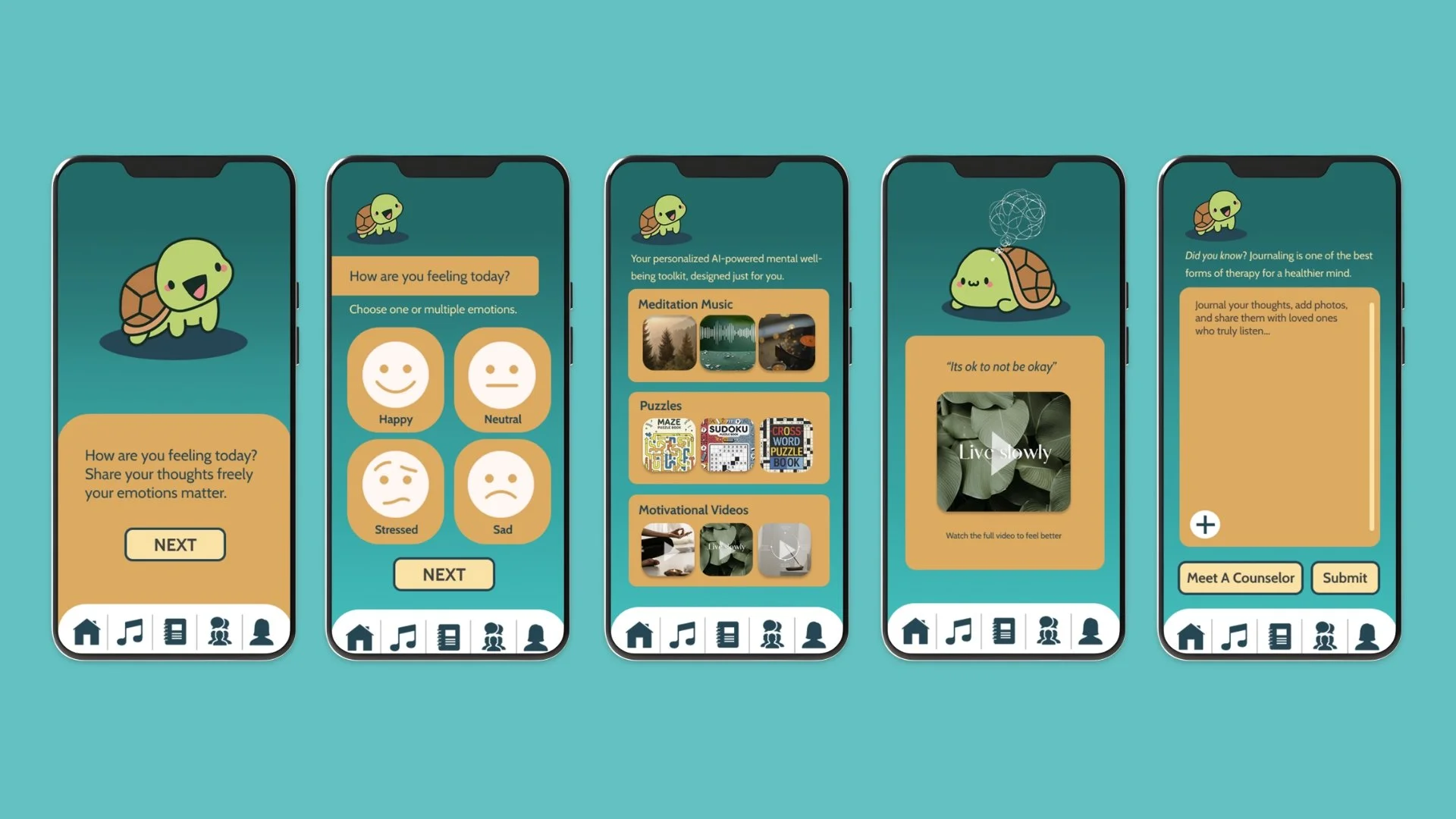
Mood Tracker & Journal Entries
Allows users to log their current mood while creating journal entries with photos and voice memos. Based on their mood, the app can recommend personalized music, puzzles, videos, and reflective prompts.
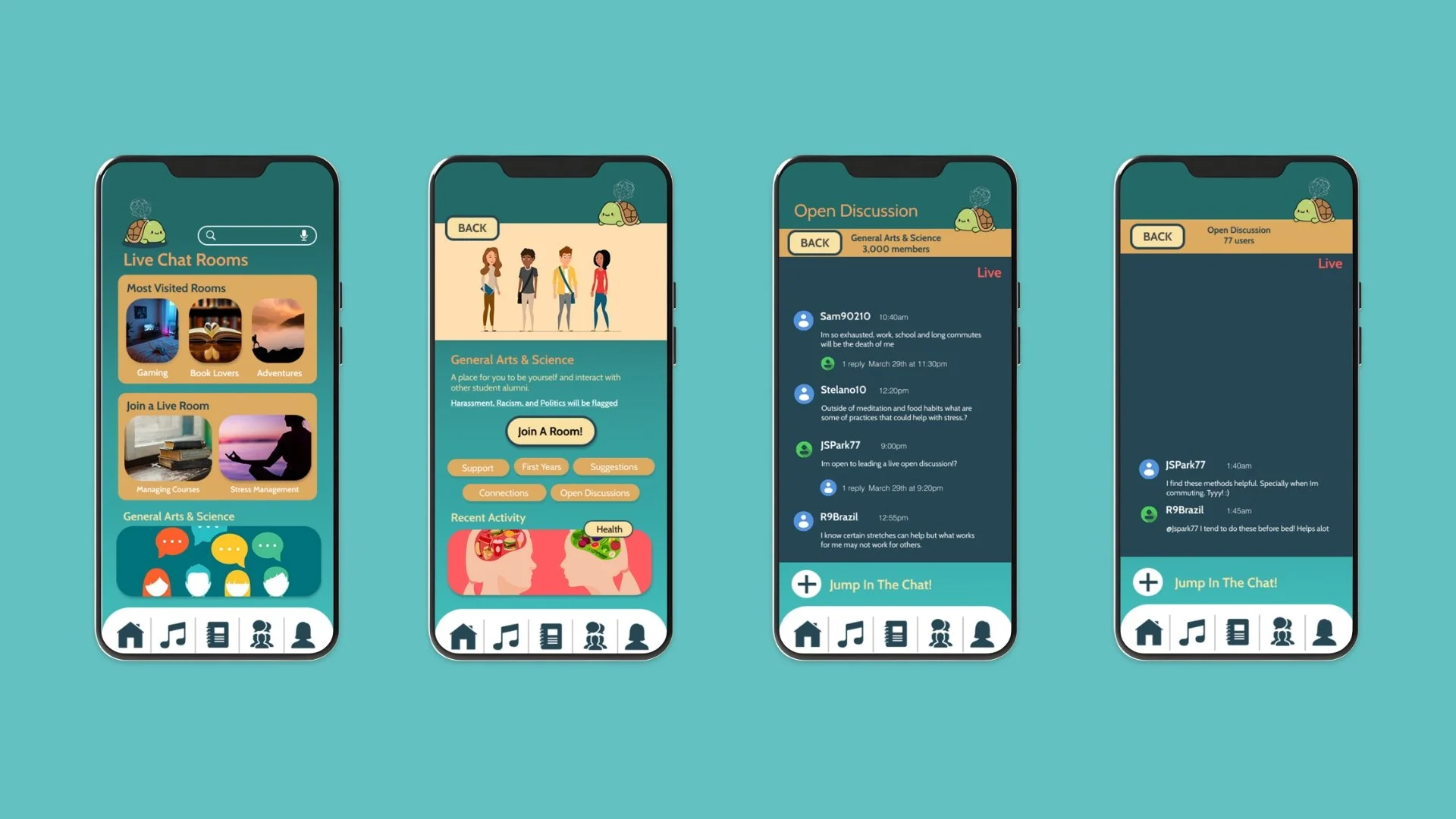
Live Chat Rooms
Allows users to chat in different rooms, discuss different subjects and interact with those in their community.
TAKEWAYS